
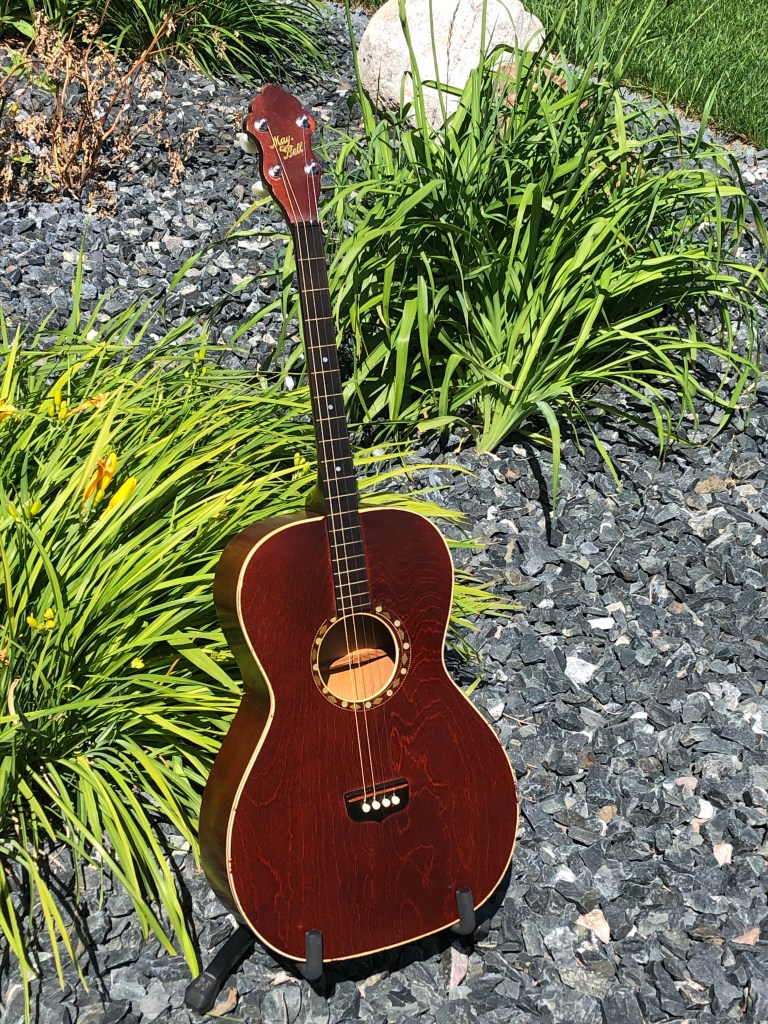
This was the first job I ever did for someone that wasn’t family or friend. The owner asked me if I could fix it after a fluke encounter through Kijiji. I was hesitant about working on a stranger’s instrument because you just never know if something might go wrong, and I didn’t want to disappoint.
This May Bell was a true “Grandma’s Attic” find, and the owner was hoping to have it restored as a family heirloom. It was in really bad condition with breaks and cracks and mismatched tuners and missing end pin and loose braces. Based on condition I figured I couldn’t possibly make it any worse, so what the heck, I said I’d give it a try.
The first step was trying to figure out “What the hell is a Tenor Guitar?” (Remember, I’m just an amateur). So I did a pile of reading and research (no, not Wikipedia) …. So here is a ….
Brief History of the Tenor Guitar
(Courtesy of eastwoodguitars.com)
A tenor guitar is a 4-string, short-scale guitar with roots that go back more than a century, to the golden age of acoustic instrument production. Originally marketed as an easy way that tenor banjo players of the day could double on guitar, the tenor guitar’s charms have persisted to the modern day and, now, a new legion of players is discovering that the tenor guitar offers a unique voice and tone for adventurous musicians searching for new inspiration.
The tenor guitar was initially developed in the mid to late 1920s by the Gibson Guitar Company and C. F. Martin & Company. Tenor guitars enabled players of the four-string tenor banjo to double on guitar without having to learn the six string guitar.
The tenor guitar can be considered to be a transition instrument between Dixieland banjo and the six string swing guitar, particularly as it started to outpace the tenor banjo in popularity, towards the end of the 1920s. This trend quickened when important players of the period like Eddie Lang and Carl Kress, switched from banjo to six string guitars.
As the six string guitar became more popular in the 1930s and 1940s, tenor guitars became less played, but returned to prominence in the 1950s and 1960s due to the Dixieland jazz revival and the folk music boom.
The Martin 0-18T flat top acoustic tenor guitar was played in the late 1950s by Nick Reynolds of The Kingston Trio, a hugely popular folk act of the period. In the mid-1950’s, electric solid-body tenor guitars made their stage debut.
HOW ARE TENOR GUITARS TUNED?
One of the attractions of the tenor guitar is the variety of available tunings. Tenors are typically tuned in fifths (usually CGDA, similar to the tenor banjo, mandola, or the viola), although other tunings are also common. ‘Guitar tuning,’ ‘Chicago tuning,’ ‘baritone ukulele tuning,’ ‘Irish’ or ‘octave mandolin’ tuning and various open tunings for slide playing are also commonly employed on a tenor guitar.
May Bell – Made in Chicago, 🇺🇸
Thanks to Slingerland.com for the following information:
Henry Slingerland (1875-1946) started in the music business importing ukuleles from Germany 🇩🇪 in about 1912. In 1923 Henry couldn’t keep up with demand, so he and his brothers (Walter and Robert) opened their own factory in Chicago. They first manufactured ukuleles, then banjos, then guitars. At this time they were using he business name “Slingerland Manufacturing Co.”
The May Bell name was trademarked in 1924 for use on their banjos, tenor banjos, mandolins, banjo ukuleles, ukuleles, and guitars. By 1927, Slingerland was well established in the Banjo making business and they started making drums in response to the Ludwig company venturing into banjos. (I’ll leave the drum history for you to read about on your own, but it is one heck of a good story).
If you’re tired of reading by now, I apologize, but the coolness 😎 of the May Bell brand and tenor guitar history is really what convinced me to make this instrument play again. The history lesson is over now, time for some pictures.

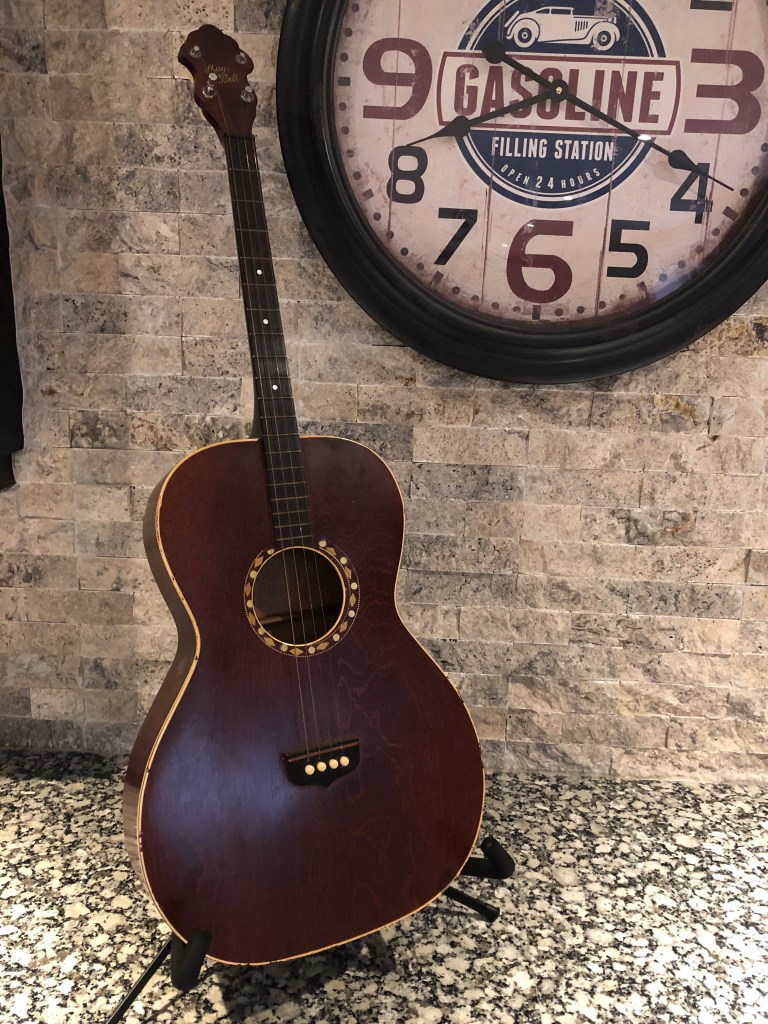


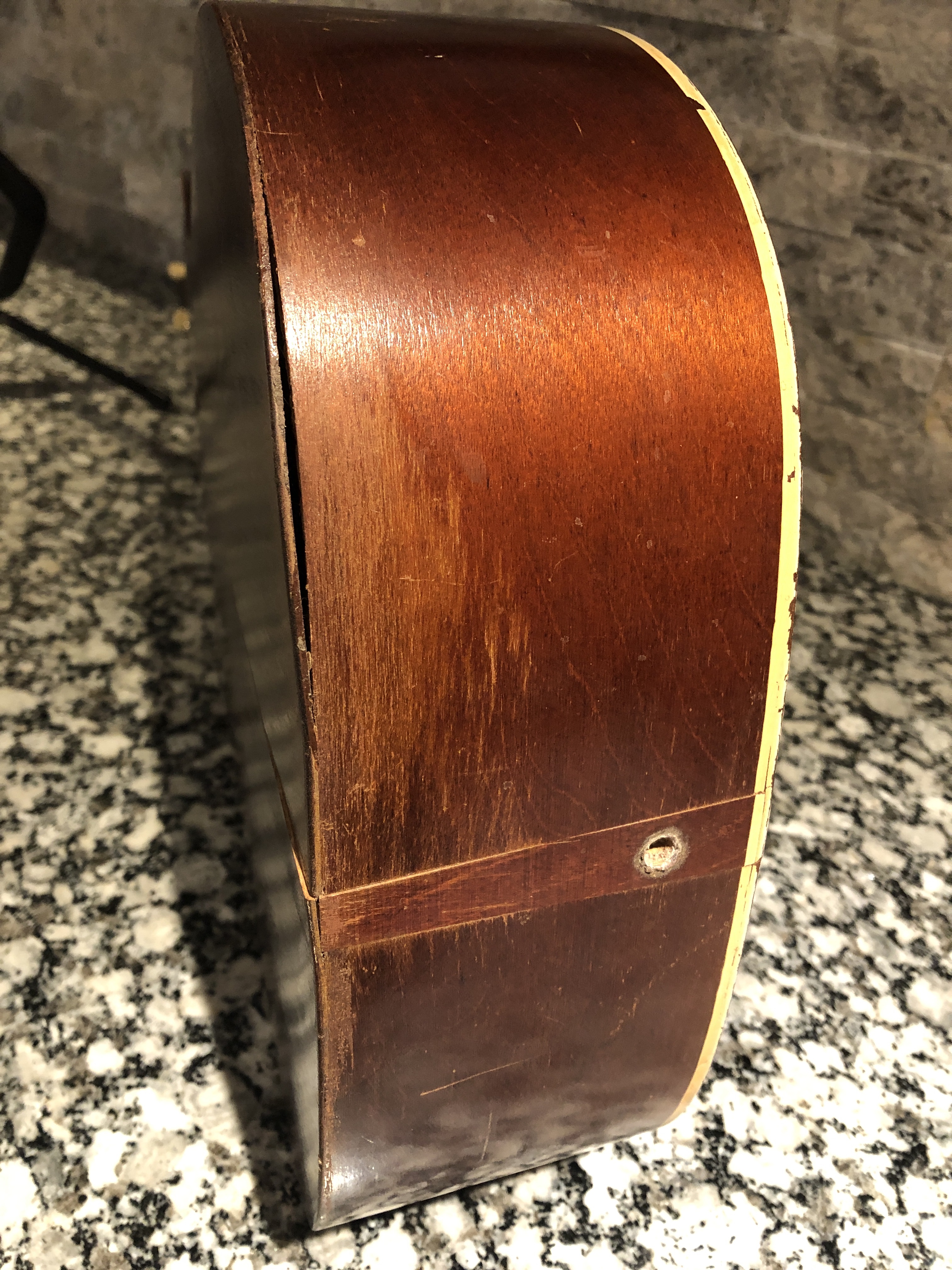


Step 2: fix crack in the back. To fix the crack, I liberally spread some high grade cabinet maker glue all over the area and used suction cup to squeeze it down into the crack, just until I could see glue coming through the other side.


Step 4: was to reset the inner brace, but I forgot to take pictures of it. Sorry.


And now for the reveal…


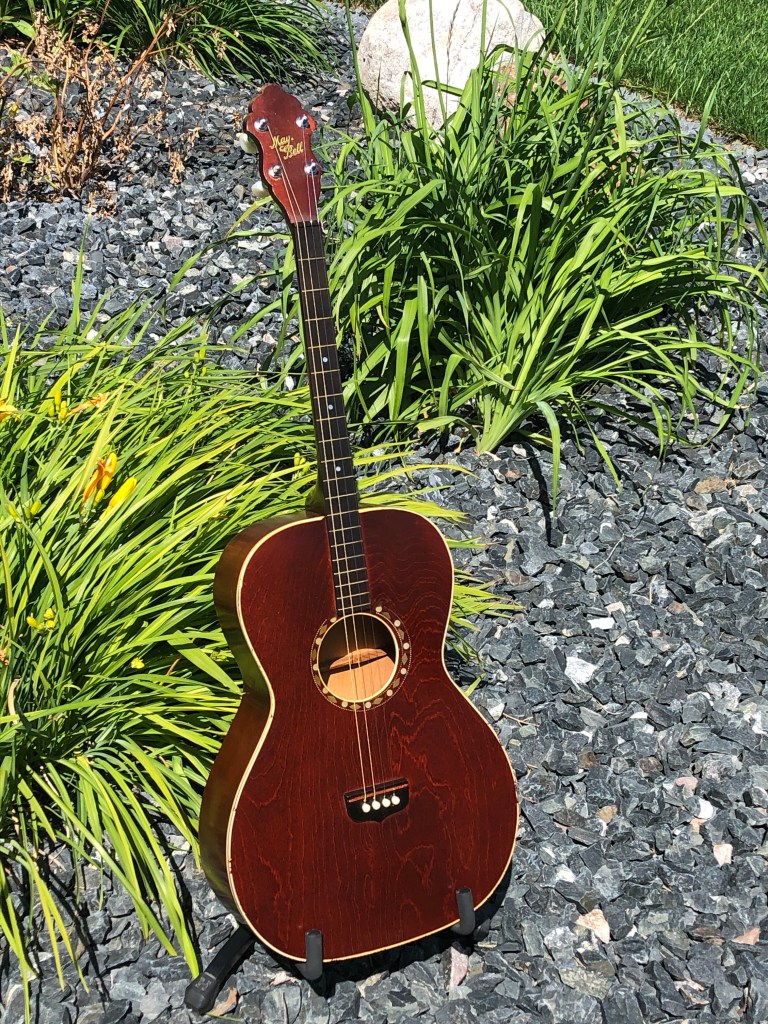
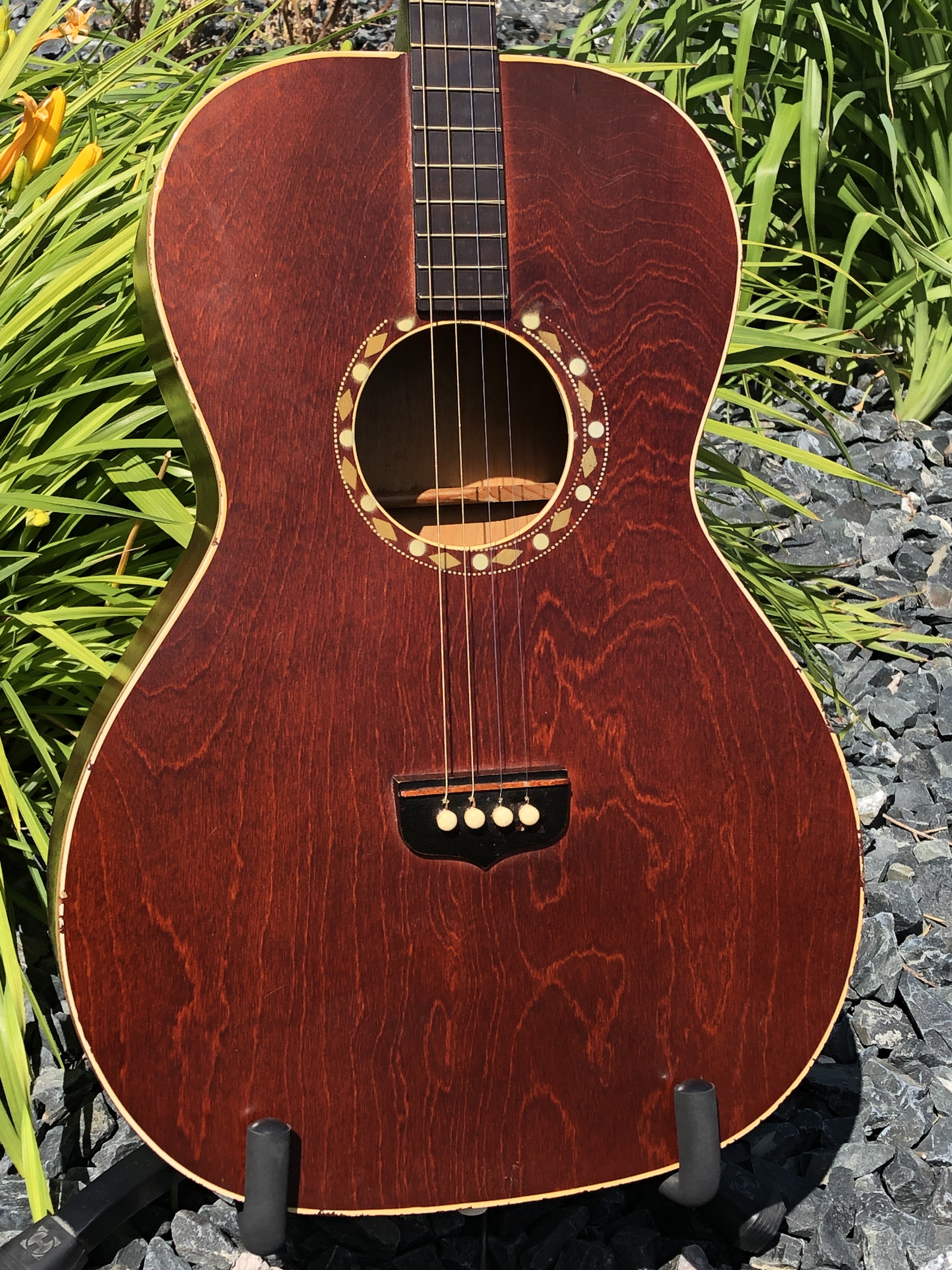

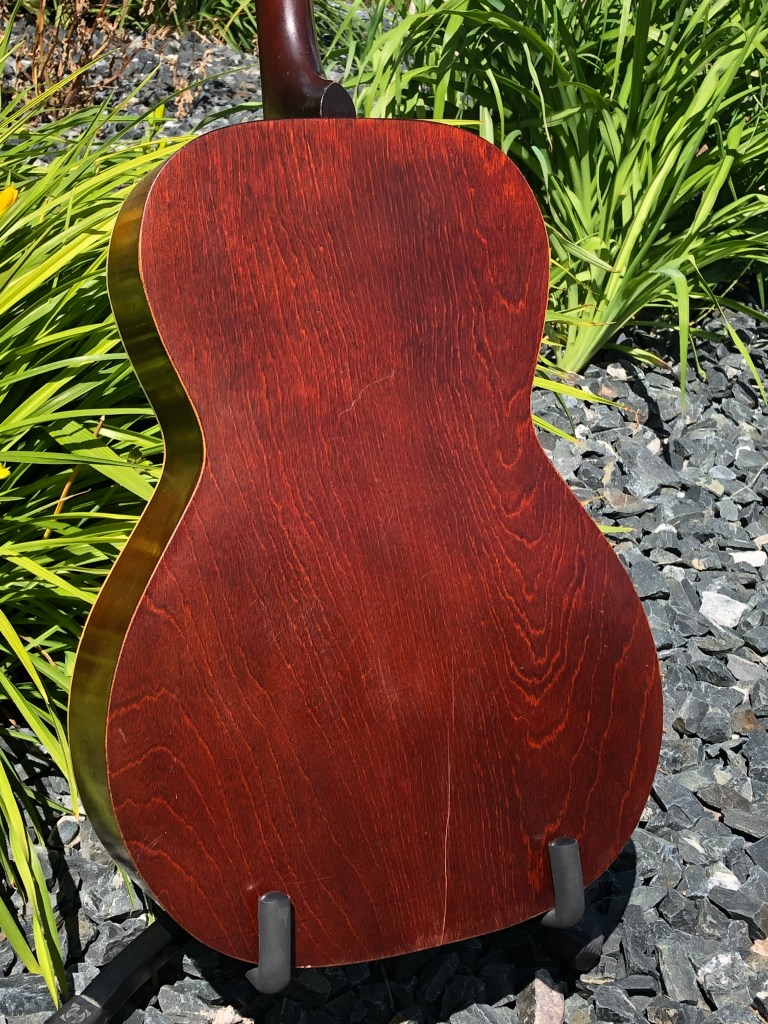

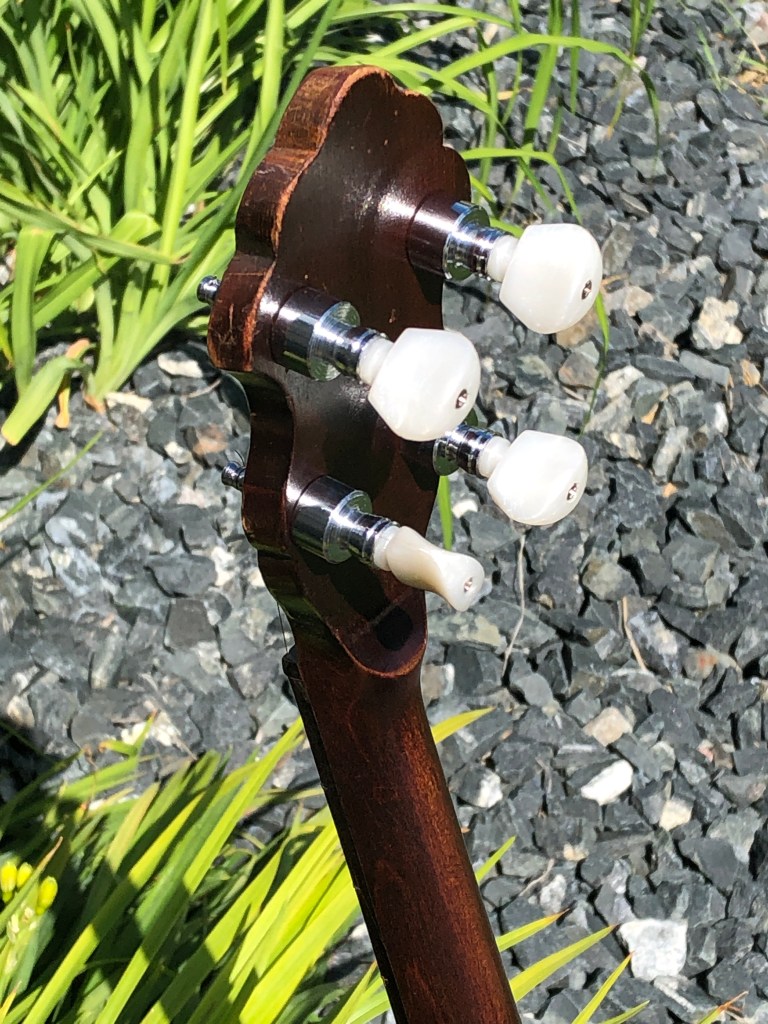

This was an immensely entertaining project and I leaned a whole lot about tenor guitars and the May Bell brand. Thanks to the owners of this cool 😎 piece for letting me work on it.
 General Guitar Works
Leave a comment