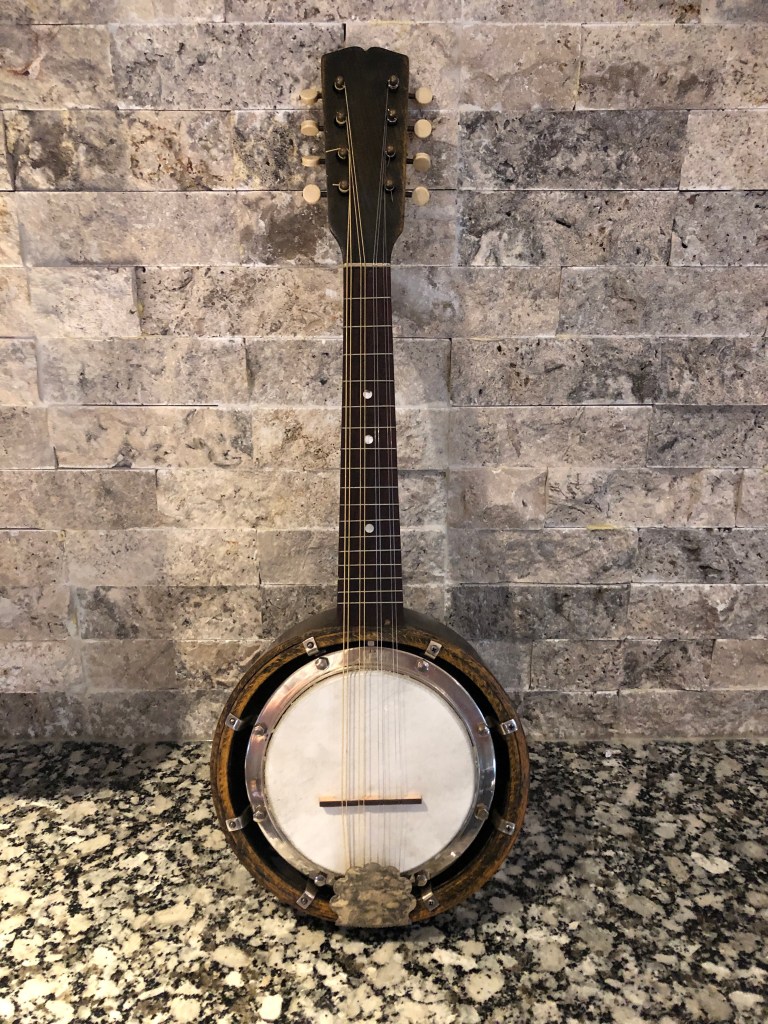
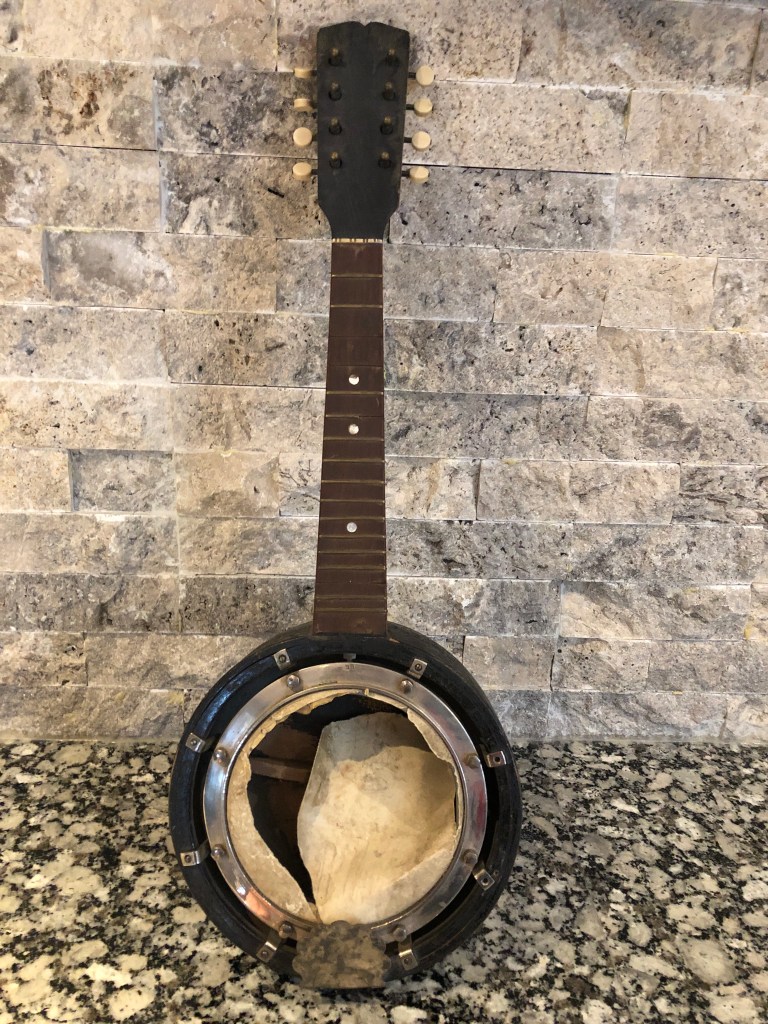
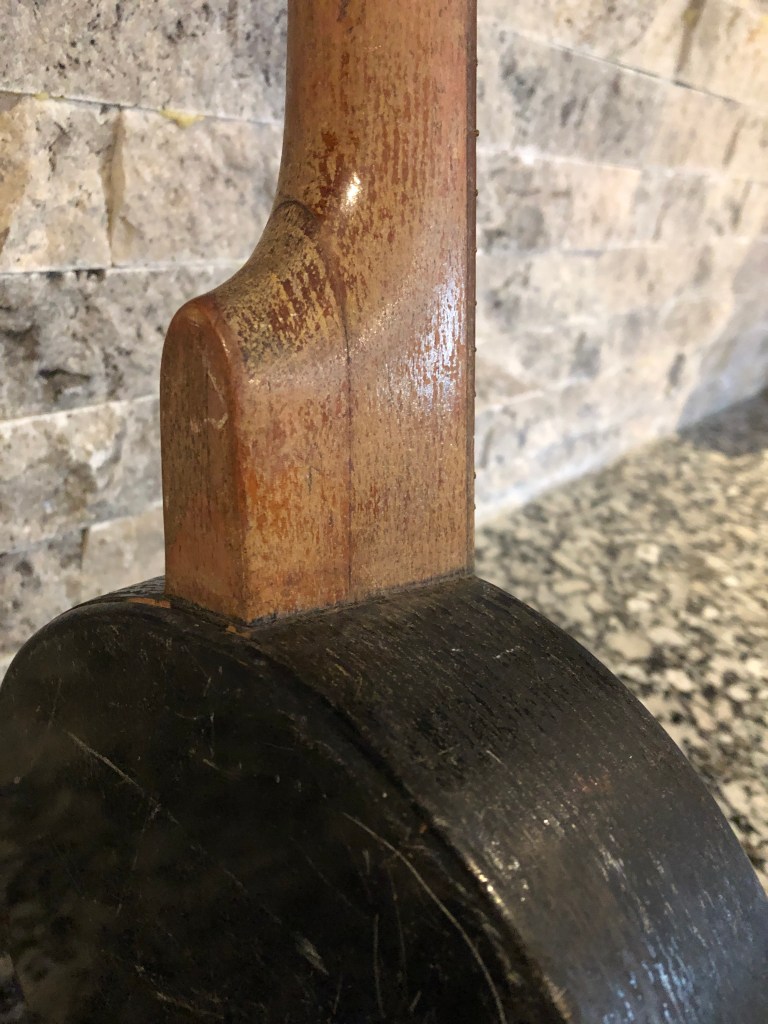
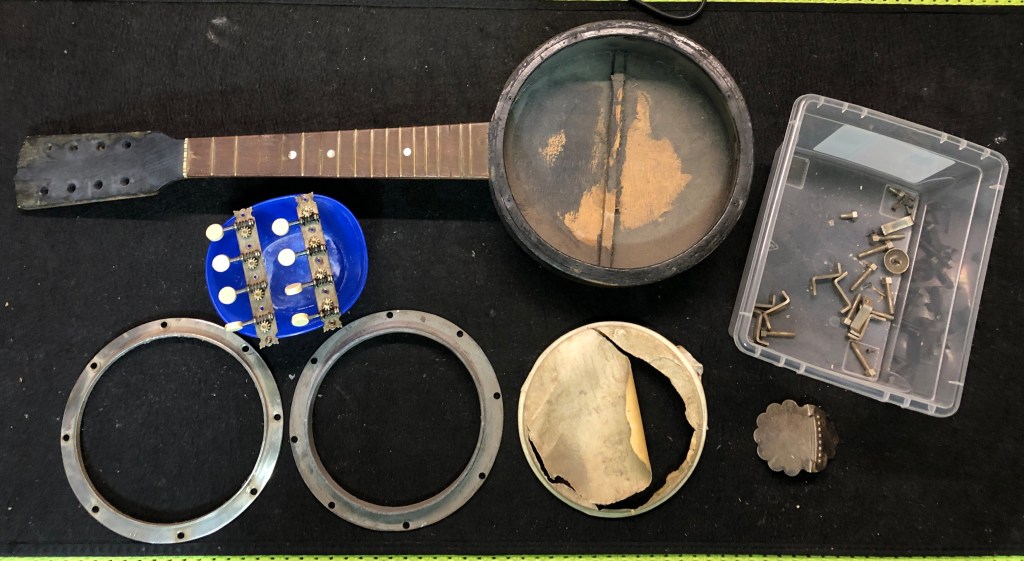
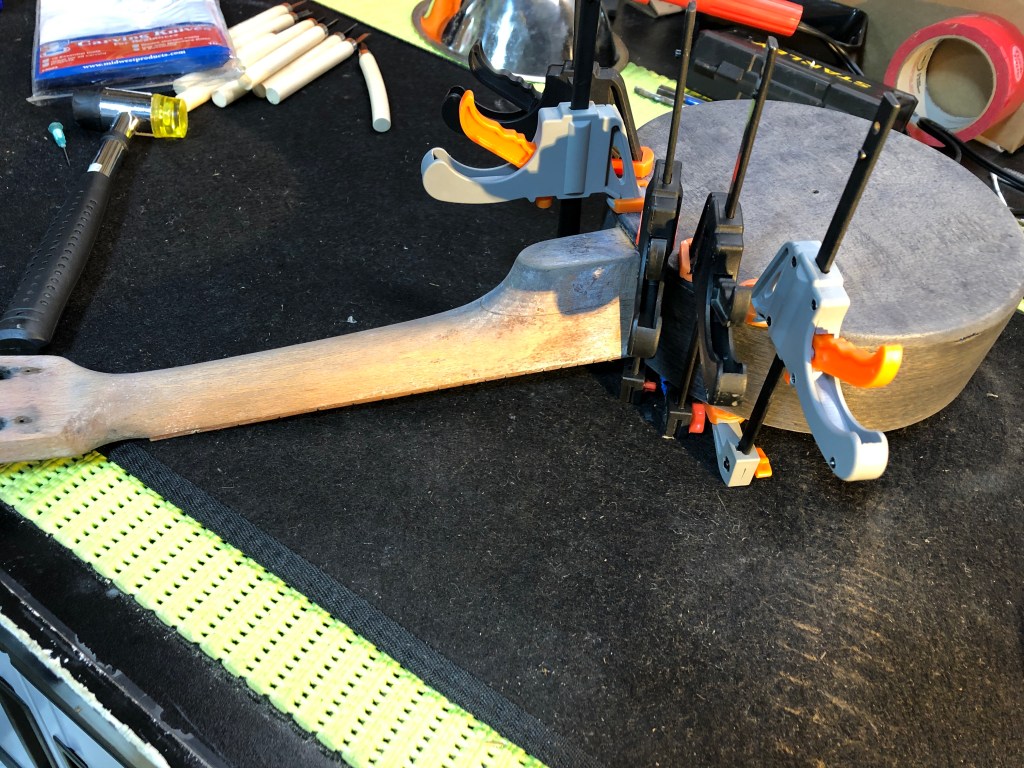
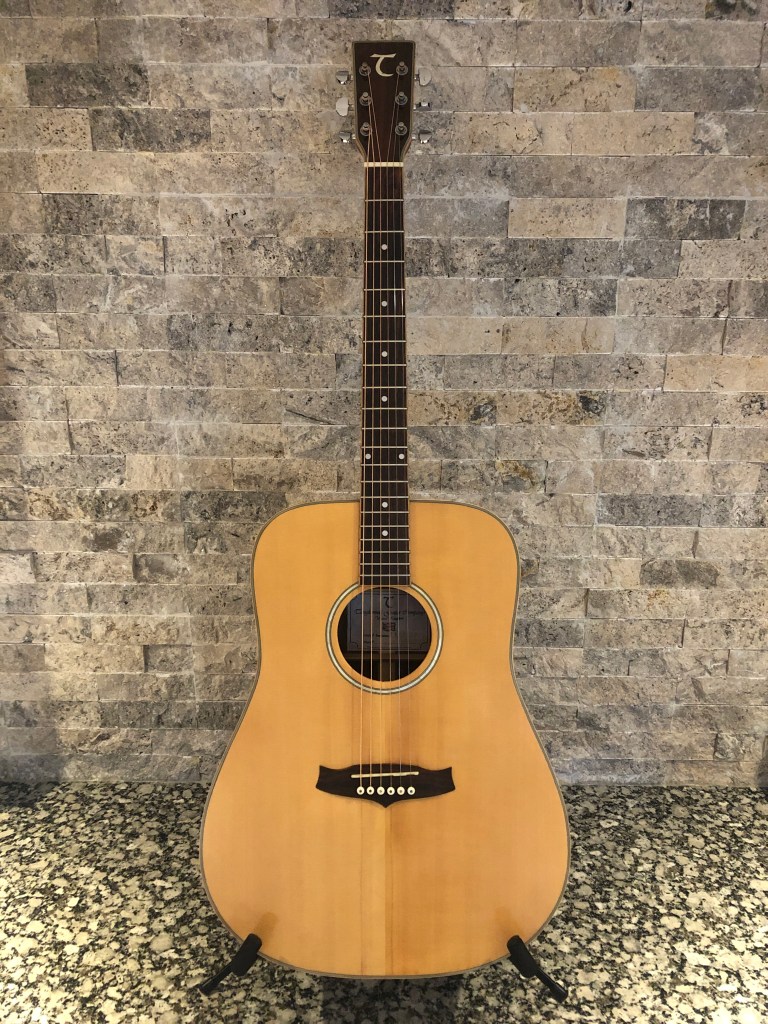
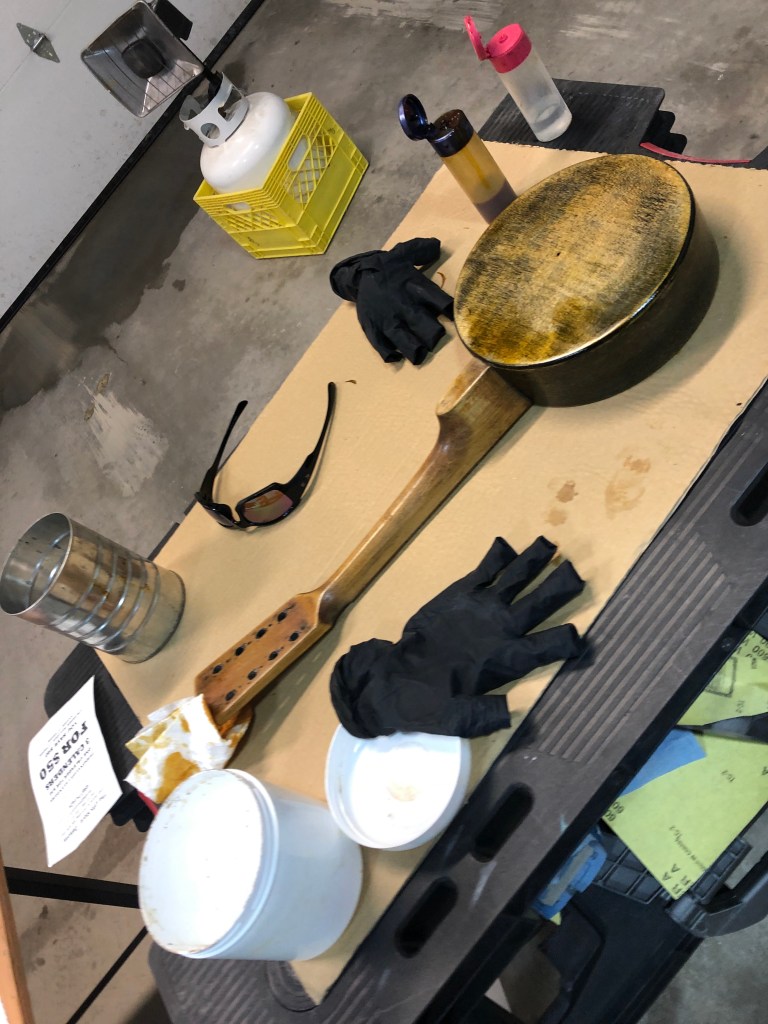
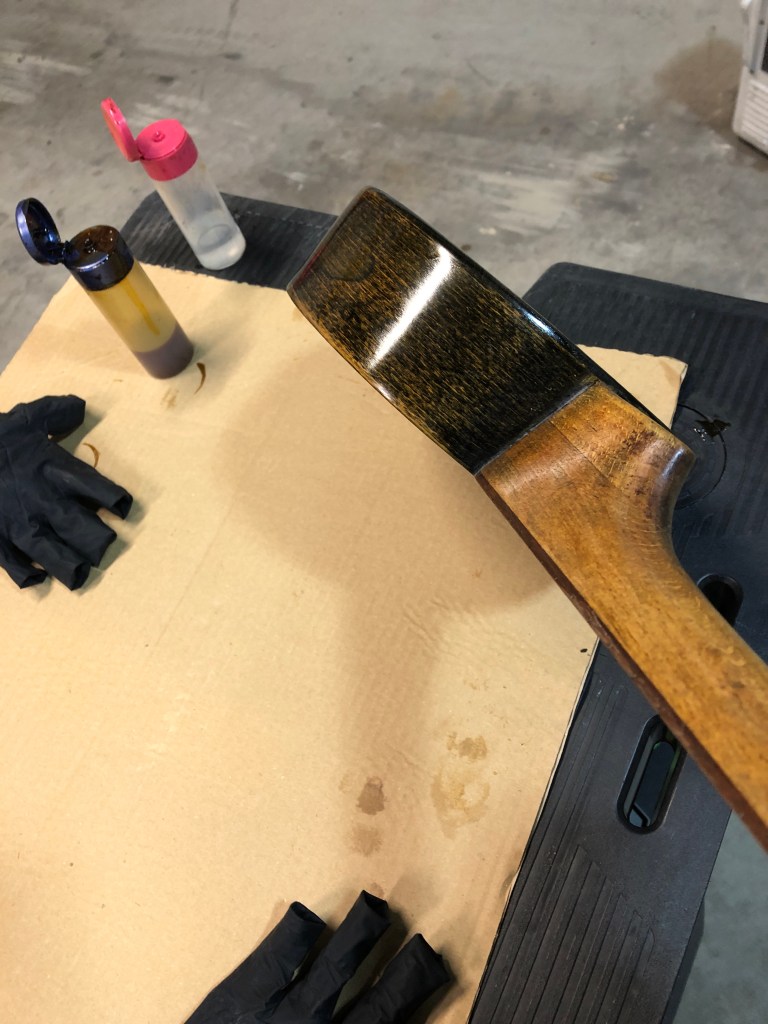
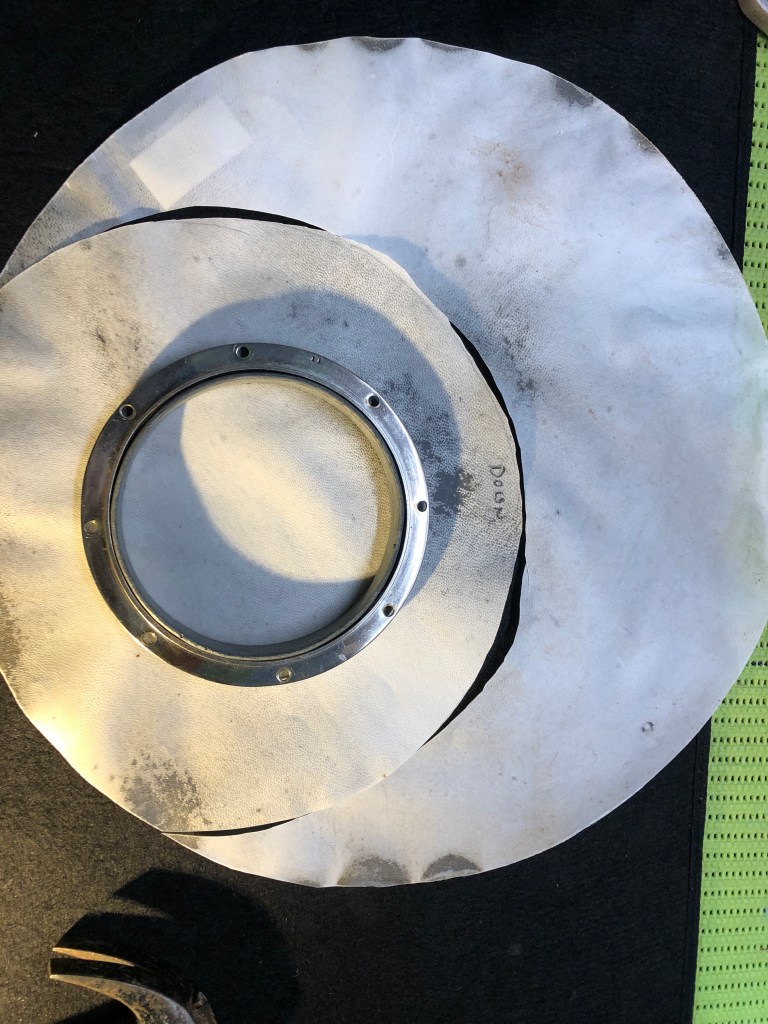
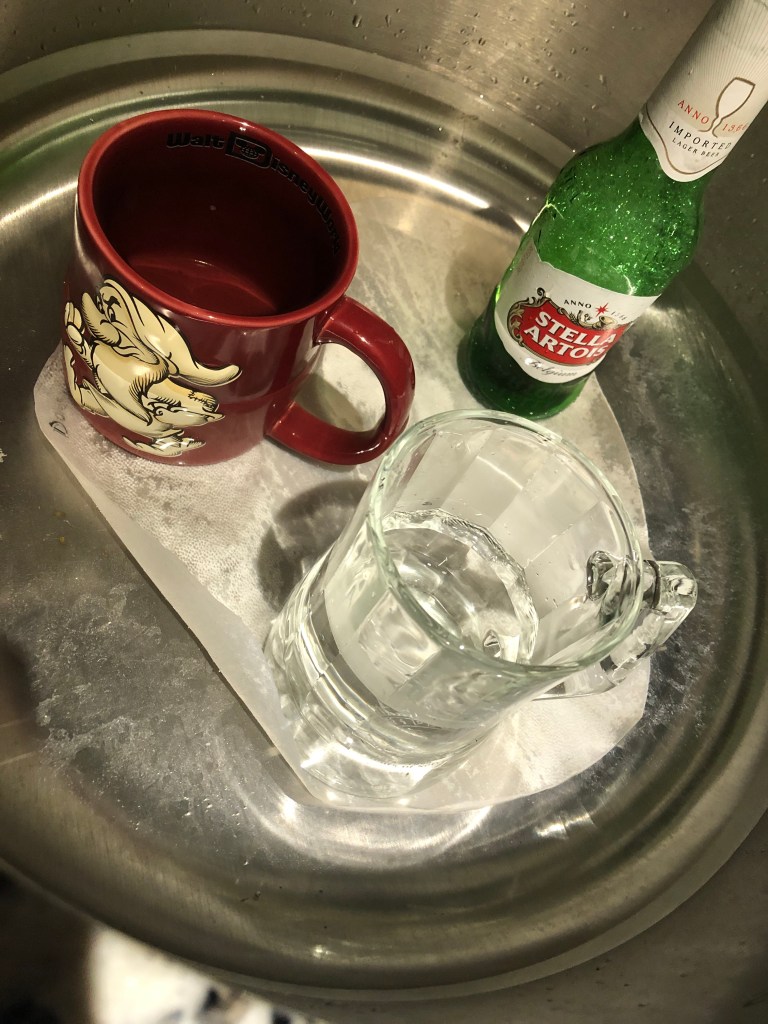
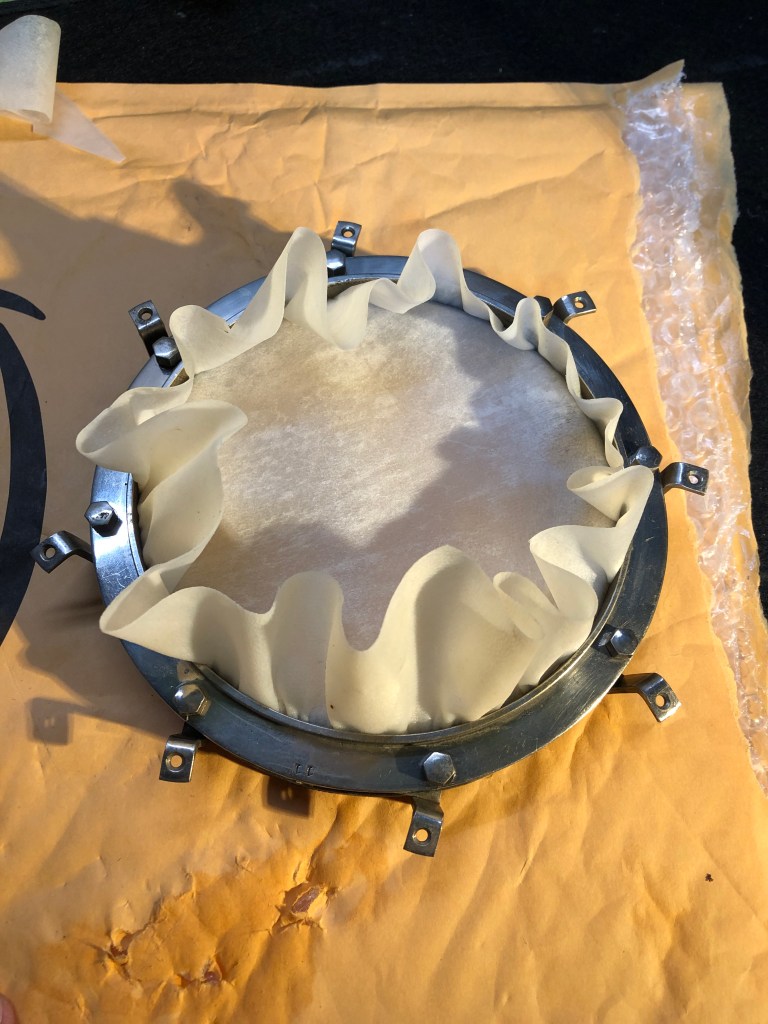
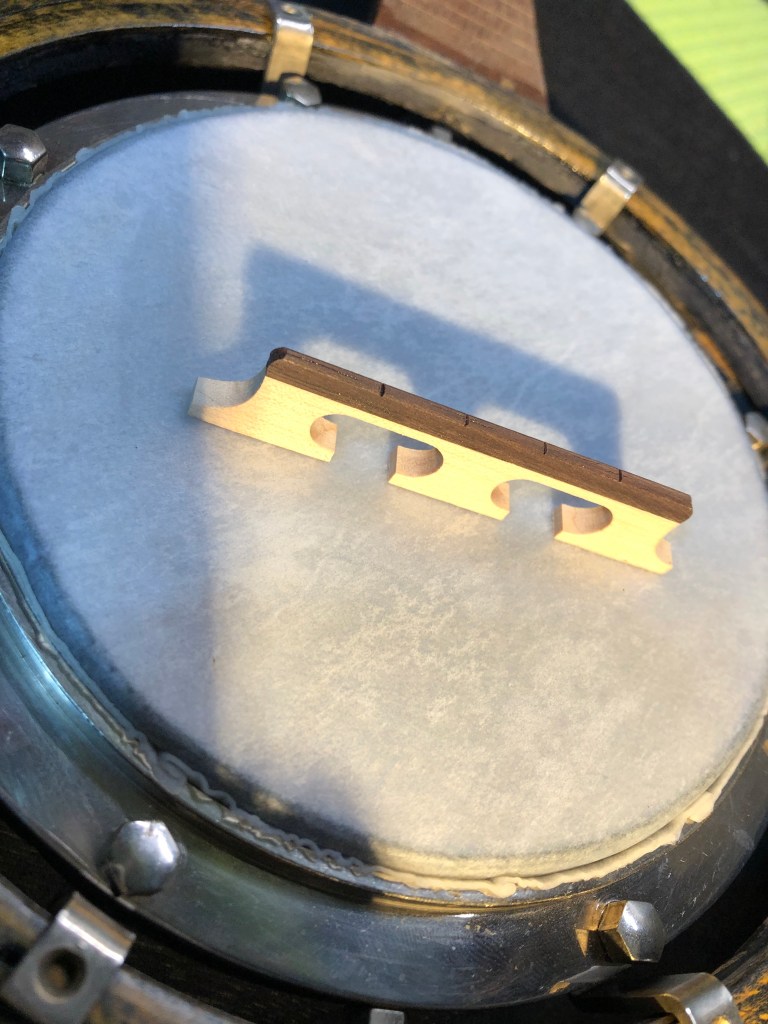
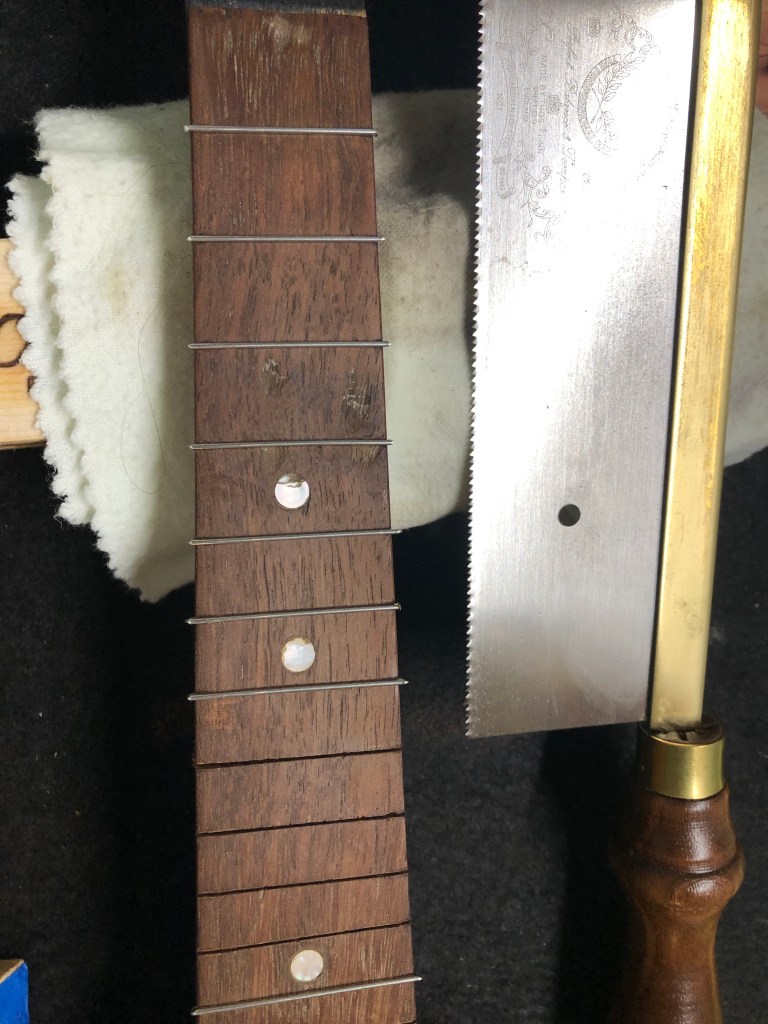
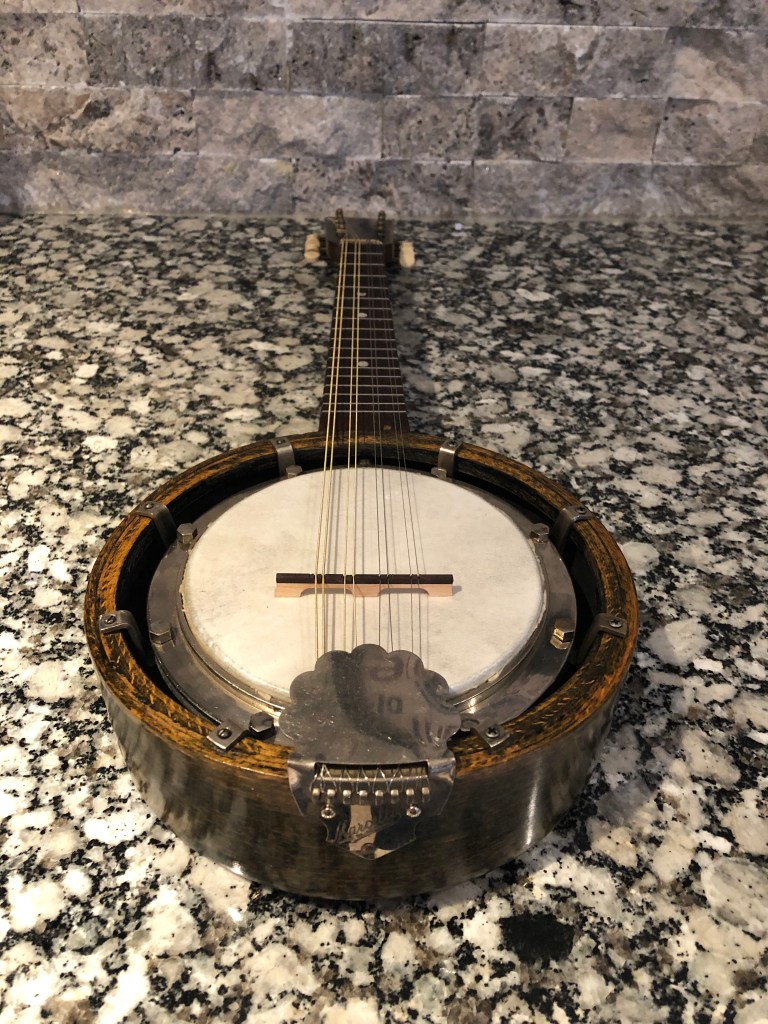
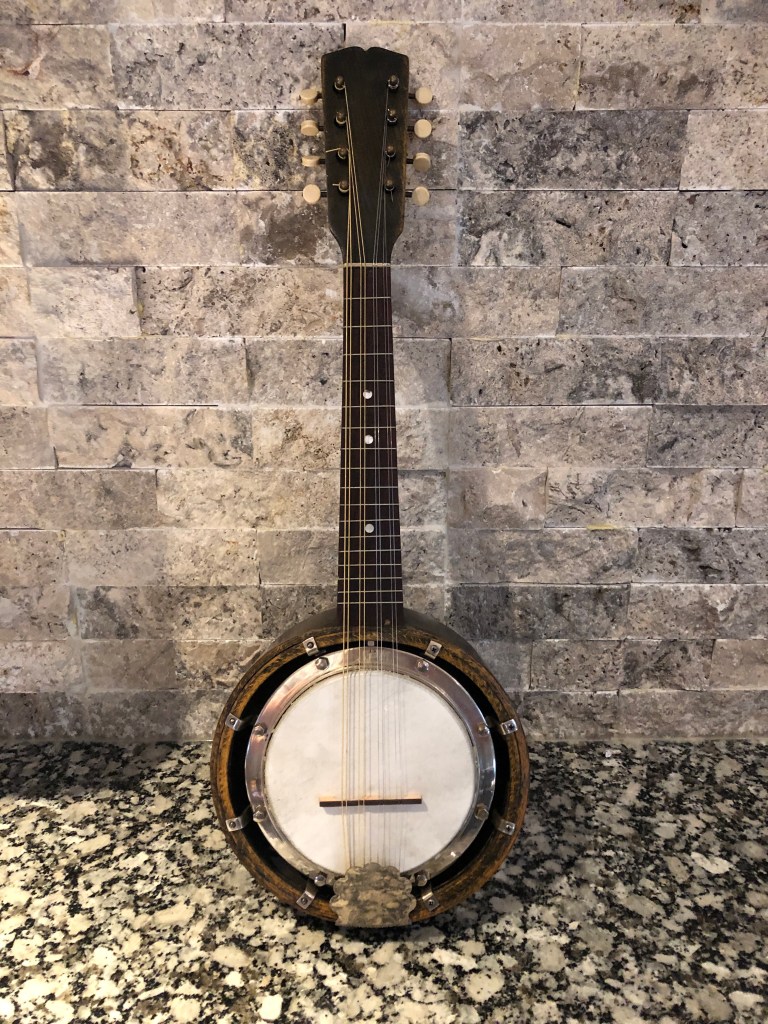
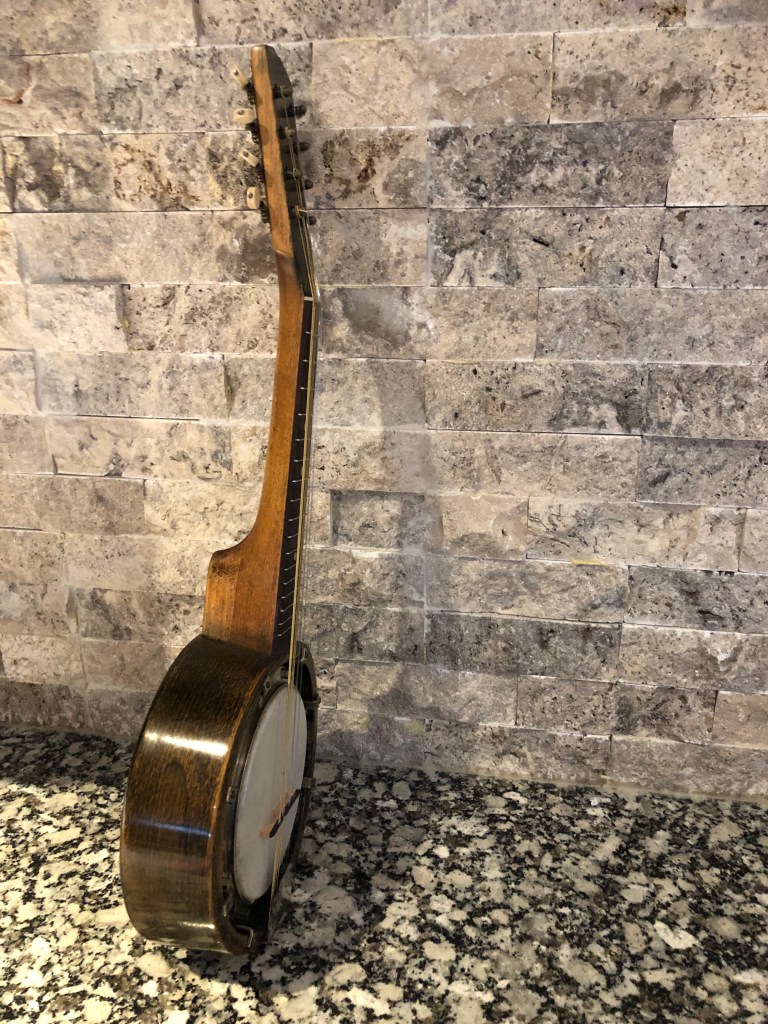
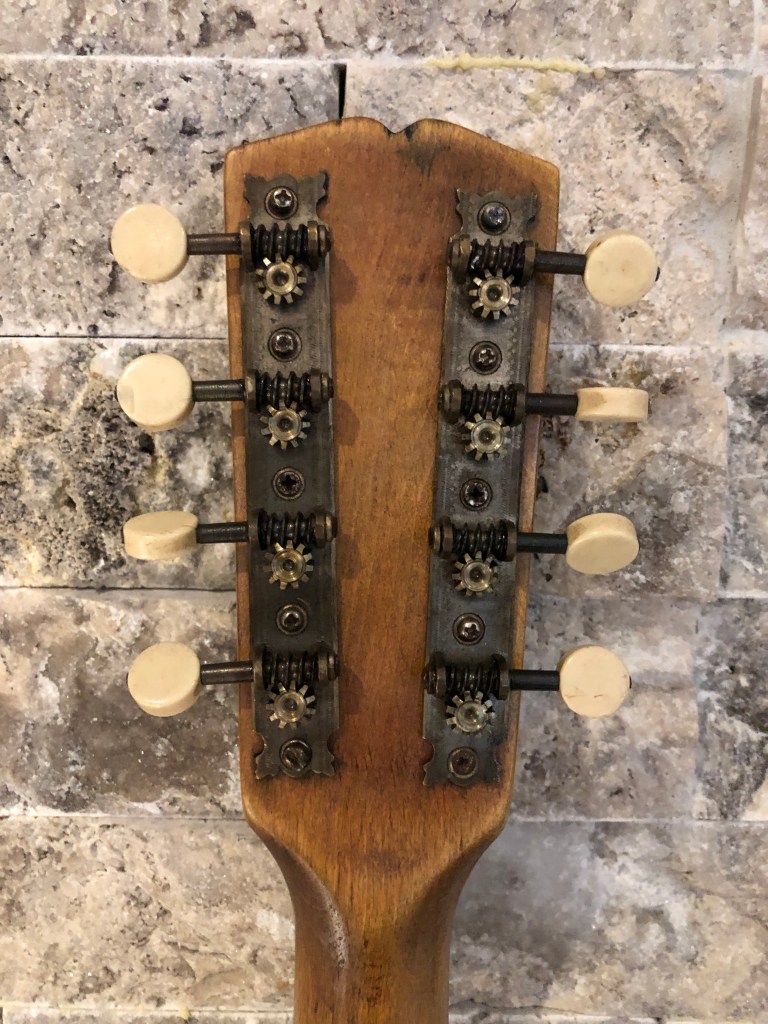
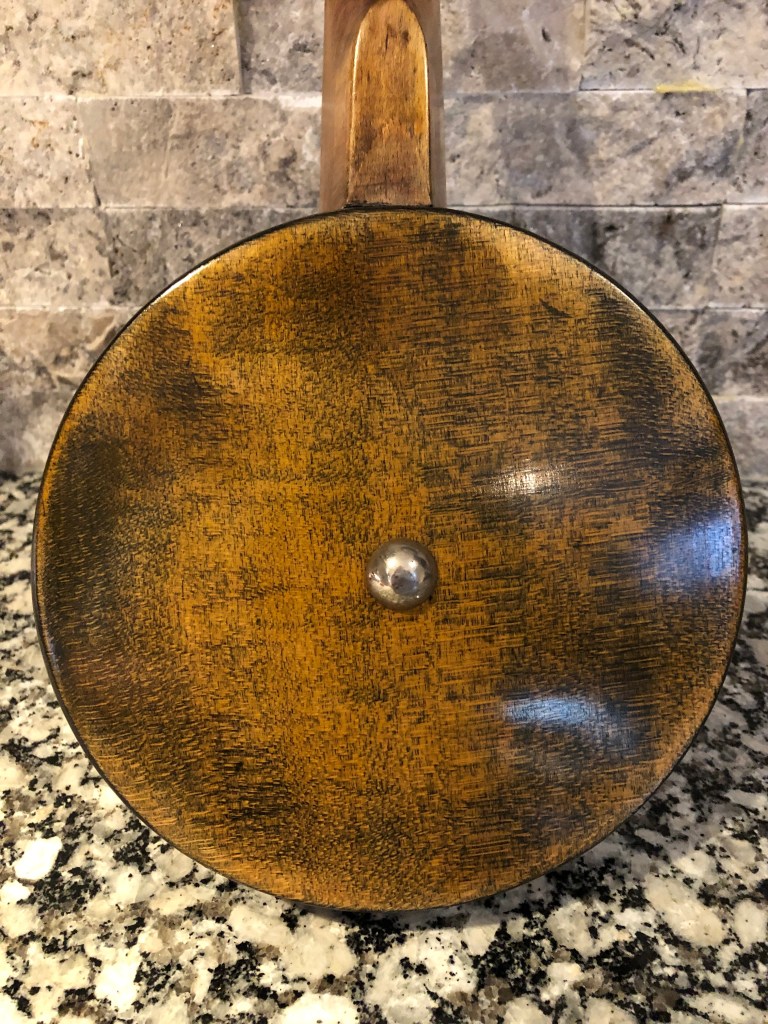
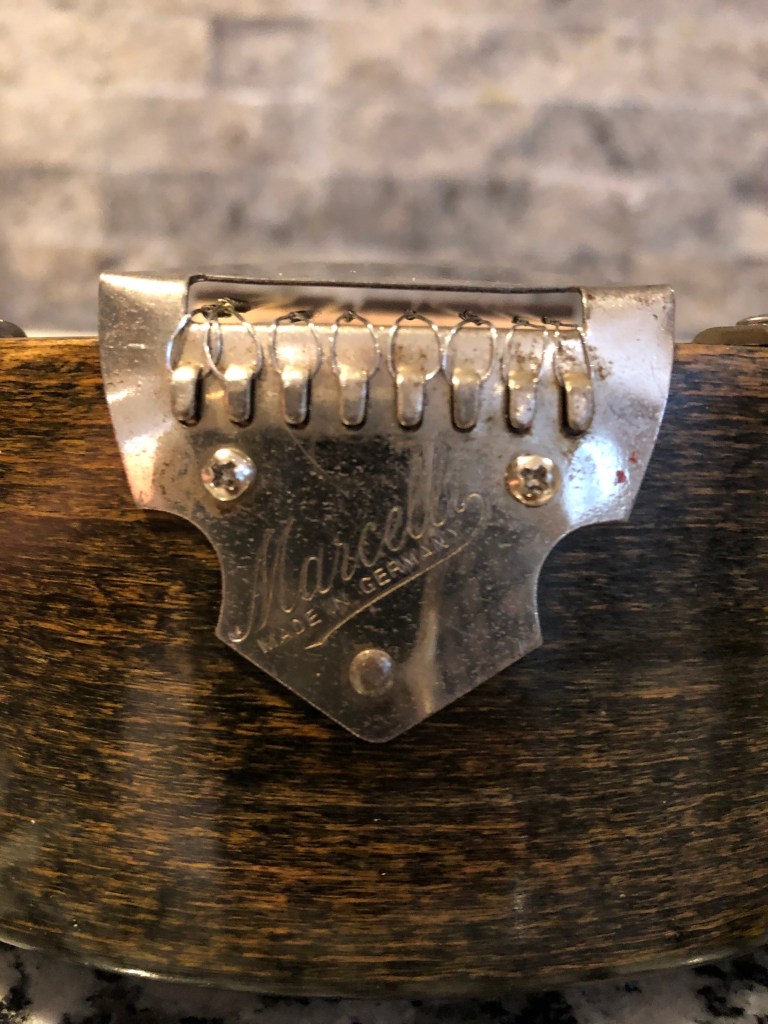
This Marcelli Banjolin was made in Germany, likely 1920s or 1930s. A fellow in downtown Winnipeg asked me if I wanted it to fix up, otherwise he was going to throw it out. I definitely put more into it than it was worth, but it was fun and I learned a new skill in re-skinning a banjo head. Before and after pics are below. Before. Not much good here. Missing frets. Back split from sides. Step one: Disassemble. Step 2: sand slivers off the body and glue what needs gluing. Step 3: WHAT THE HELL?!? This doesn’t belong here. Disregard. Step 4: sand and French polish. Step 4 (continued): French polishing is a fair bit of work. Step 5: cut new goatskin banjo head. Step 6: soak goatskin minimum 30 minutes. Step 7: place wet skin on ring. Step 8: work top ring over inner ring (I don’t know what it’s really called … it’s the ring thing that hold the skin overtop the other ring thing, pushing it down on the bottom ring thing). Step 9: trim and let dry overnight. Step 10: re-fit to body. Step 11: Recognize that you cannot buy a bridge for a mandolin, you have to buy one for a 4 string banjolele, then cut, sand and shape it to fit.Step 12: Refret the whole neck (after sanding the divots out of it of course). Then trim and file the fret ends. Step 13: reassemble, keep working that bridge until it’s the right height, add strings, magically decide what string spacing a Banjolin is supposed to have, then file string slots in the bridge. Step 14: brag about how good you are. 🤥🤫
That really is a thing of beauty! I just came across your introduction post on Facebook, and thought I’d take a look here. I’m also an amateur guitar player, just now beginning to learn the mandolin, so this particular item caught my eye. I love this!








 General Guitar Works
Wow! Ton of work! Looks great, Grant
LikeLike
That really is a thing of beauty! I just came across your introduction post on Facebook, and thought I’d take a look here. I’m also an amateur guitar player, just now beginning to learn the mandolin, so this particular item caught my eye. I love this!
LikeLike