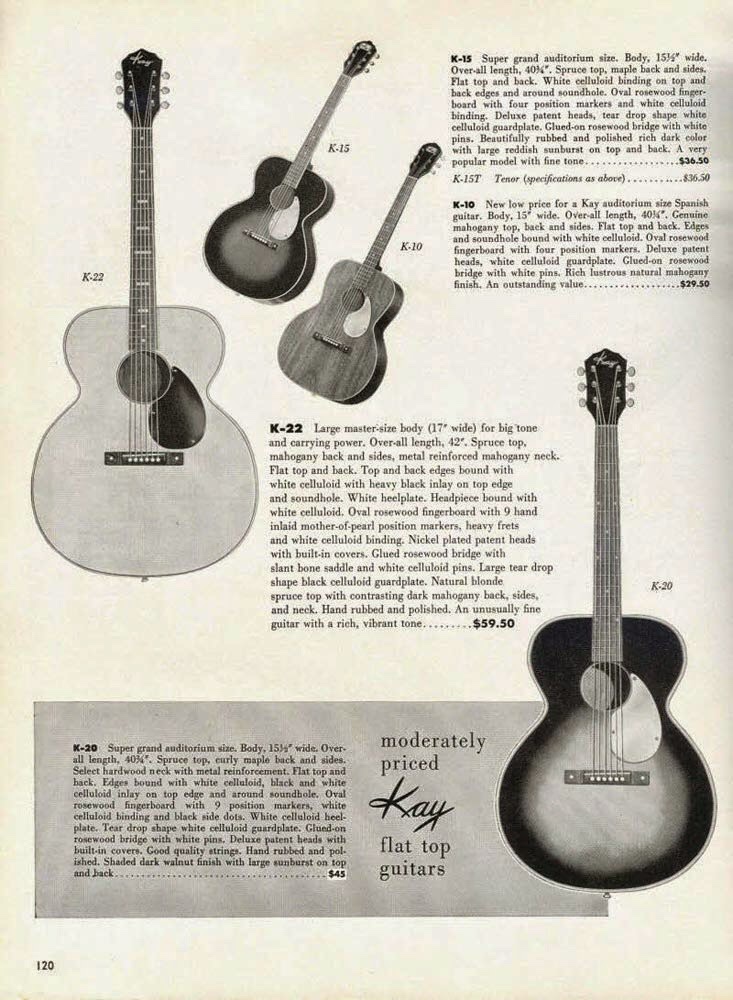
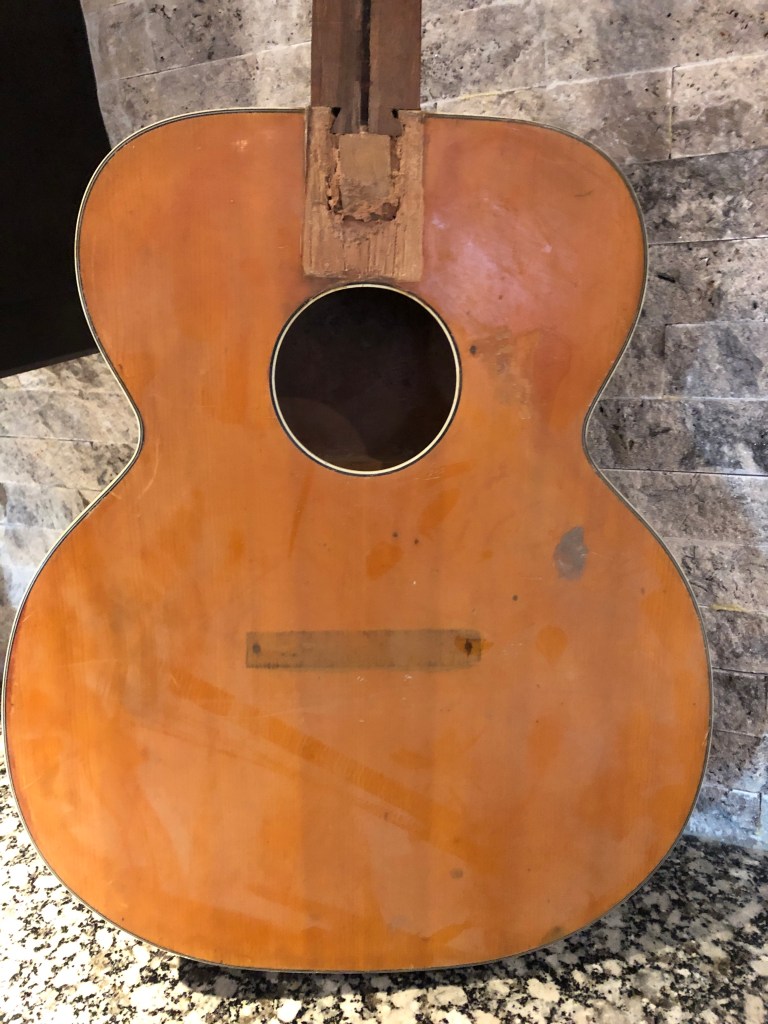
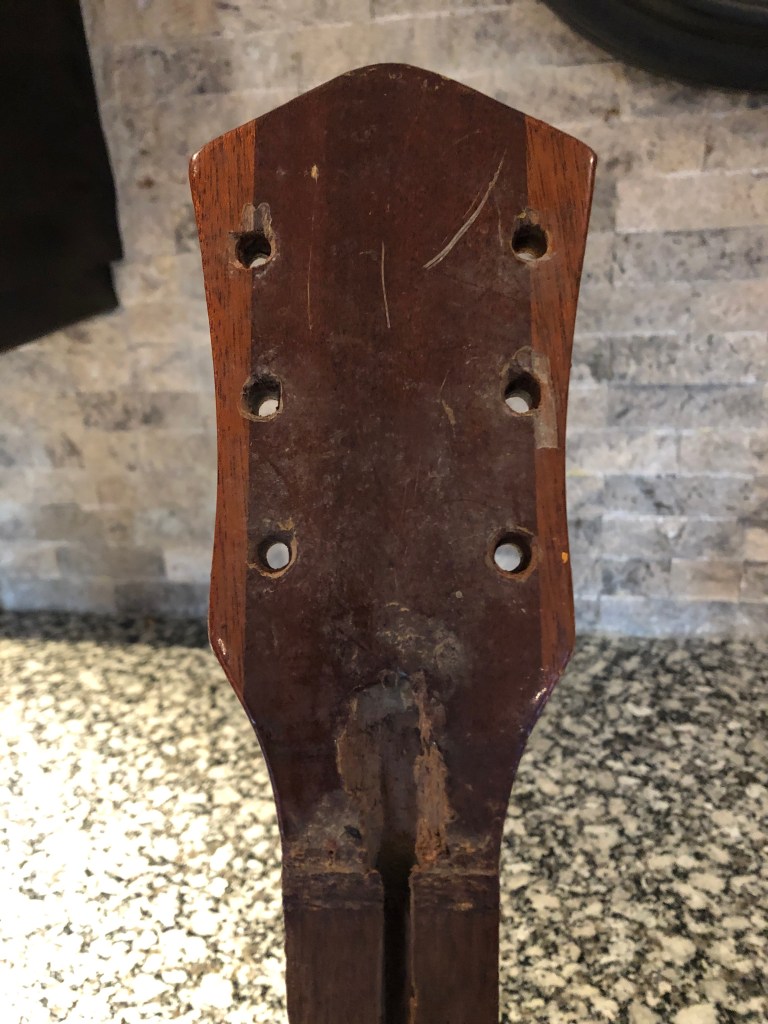
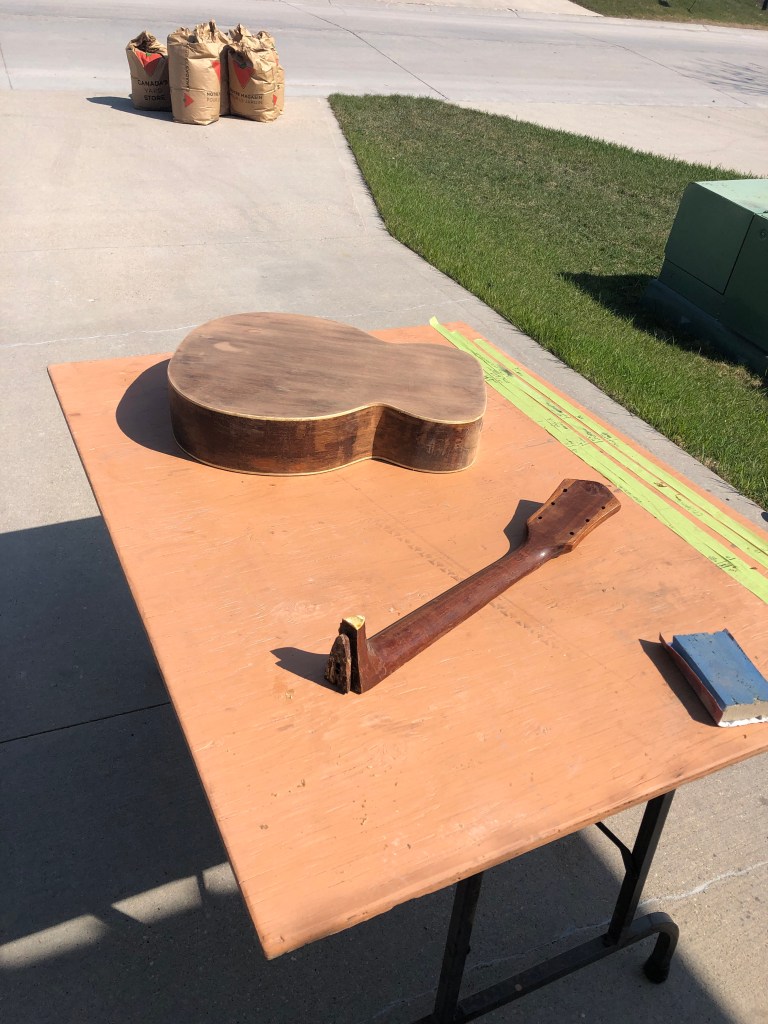
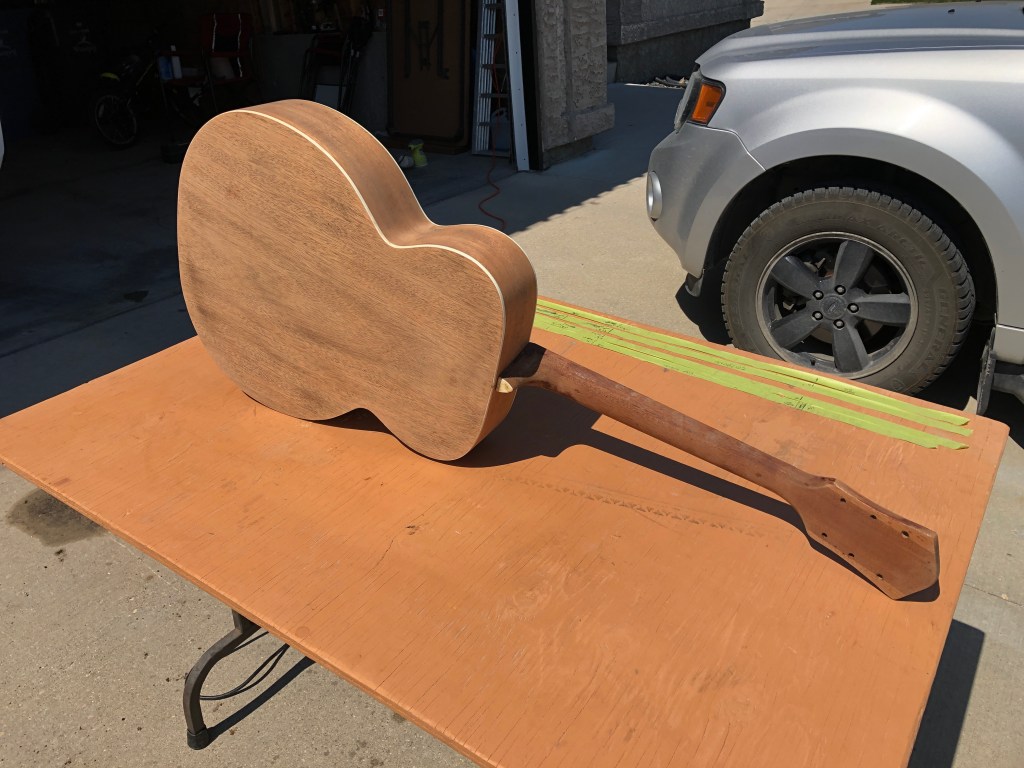
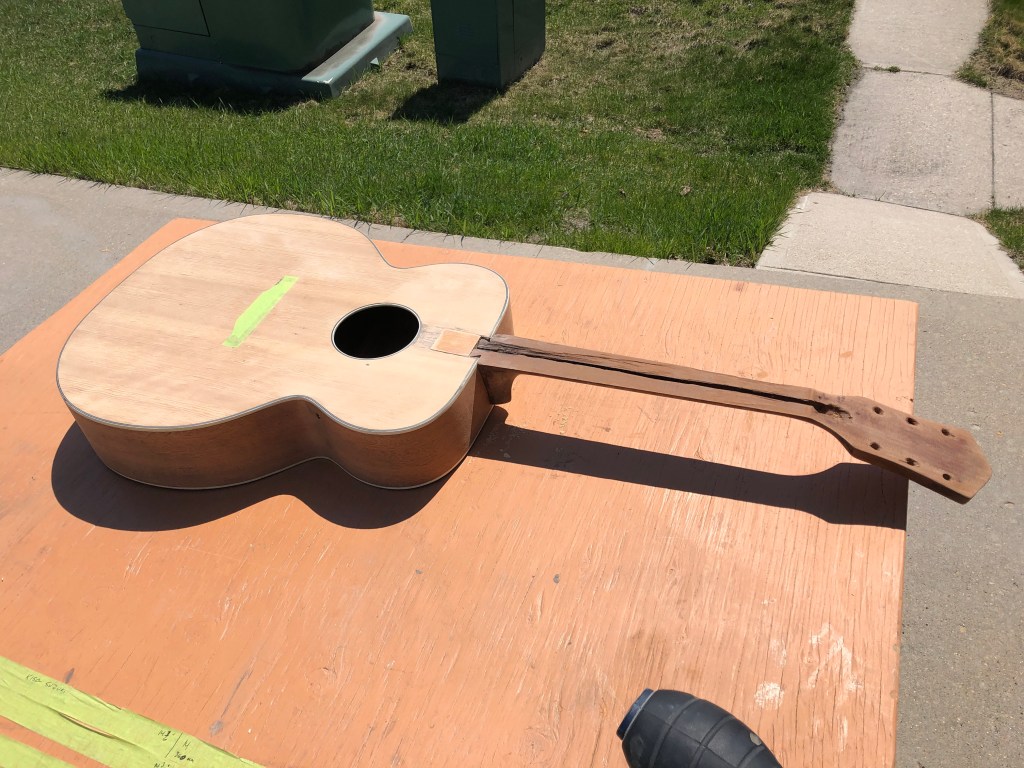
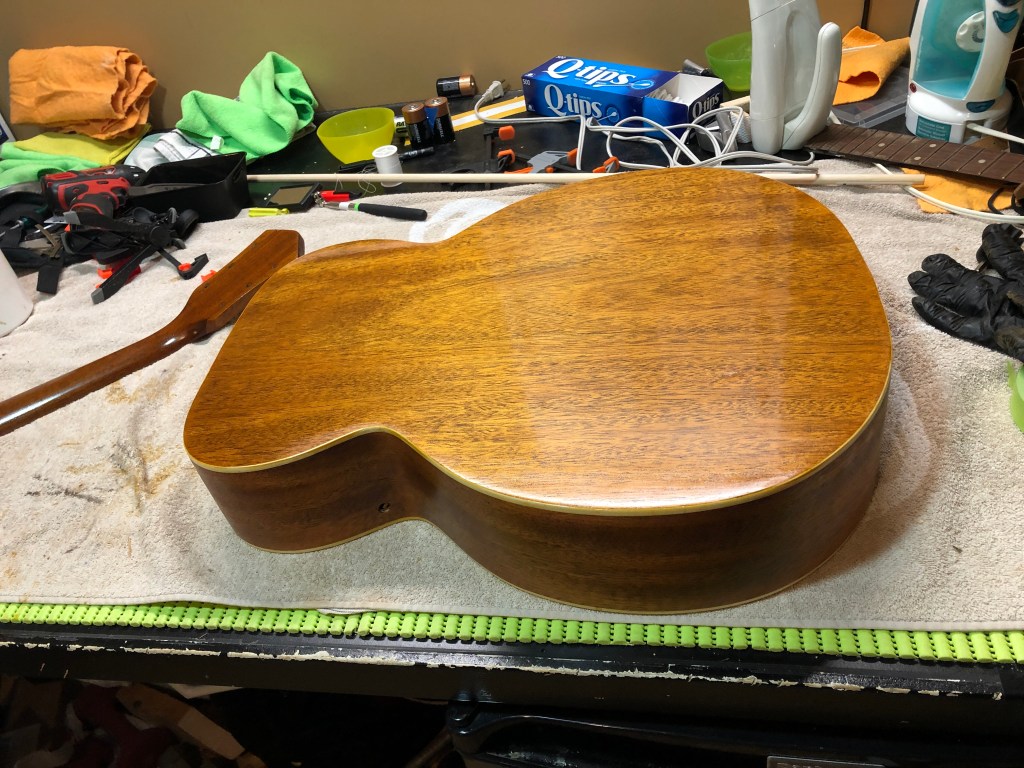
Hear it here. Thanks to Joe Curtis for the demo track – played on this guitar. Check out Joe’s portfolio here https://www.joecurtisband.com/From the 1954 Kay catalogue. At least I don’t have to provide a description 😁. Came to me looking like this. No fretboard, no bridge, chunks of wood missing from the neck, steel rod missing, etc…. The body was nice and solid though with a lovely bearclaw patterned spruce top and beautifully figured mahogany body. Okay so you can’t really see that in this picture, so follow along with the next pictures.
One thing, this guitar would have originally had a pinless bridge with strings attached to a tailpiece. Kay used both a pinless bridge and pin-through bridge. Nearest I can figure (and I’m prepared to stand corrected) is that the pinless bridge version was some time prior to 1954, since all the catalogues I could find 1954 and after show the pin-through bridge. I chose to put a pin-through bridge on it. I used a StewMac Martin Style Pre-War bridge. You’ll see.
This is definitely not going to be a strictly vintage restoration job. It’s going to be an absolute one-off. I hope it turns out. Let me know what you think when it’s done.
Here begins the restoration photos.
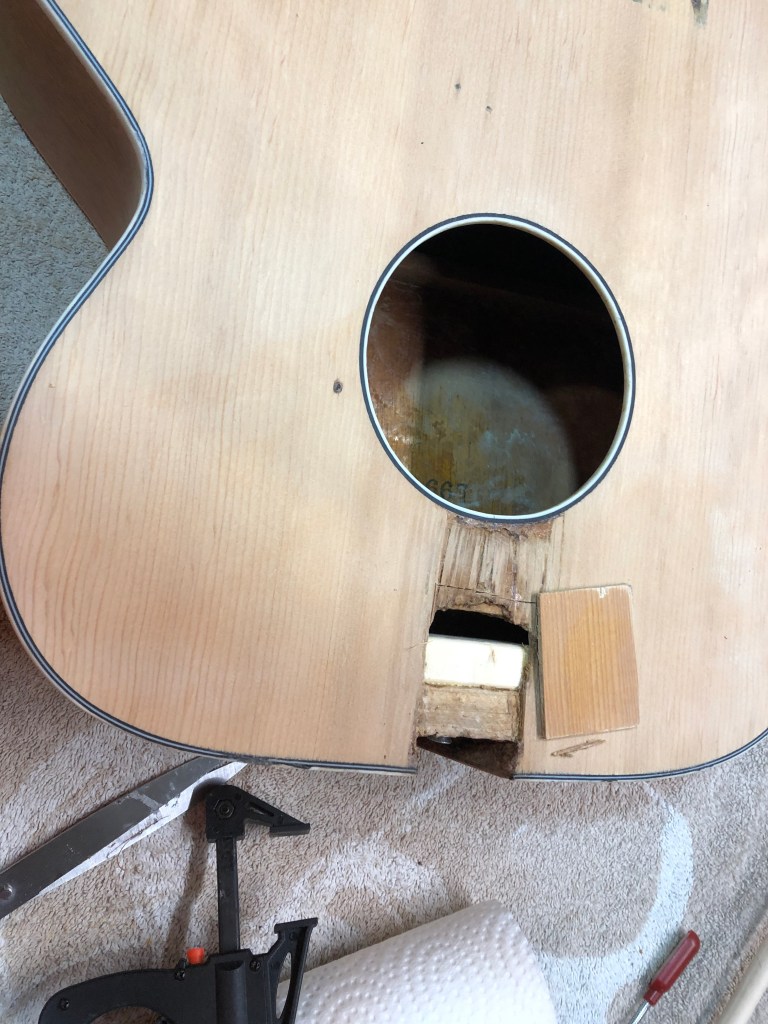
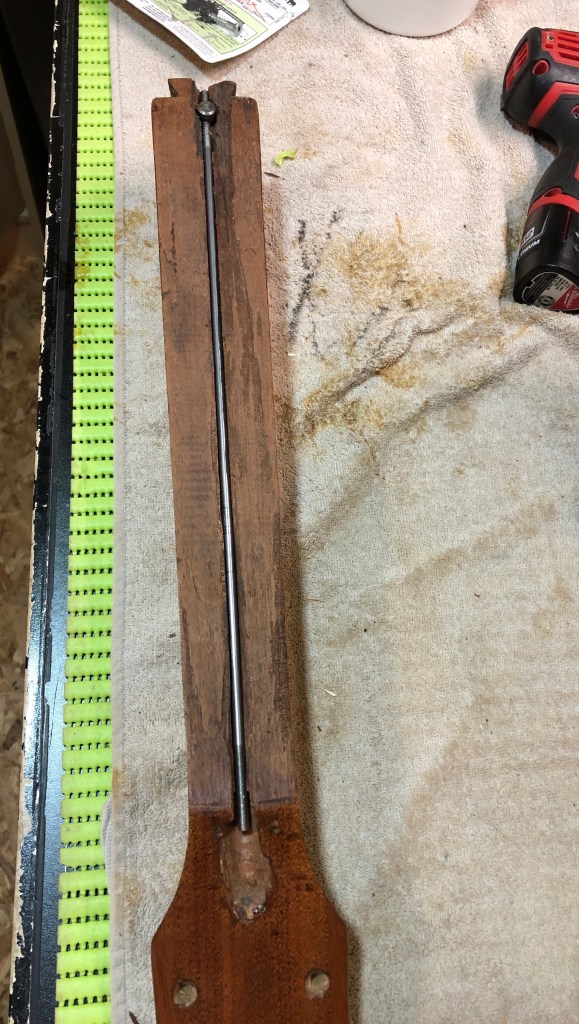
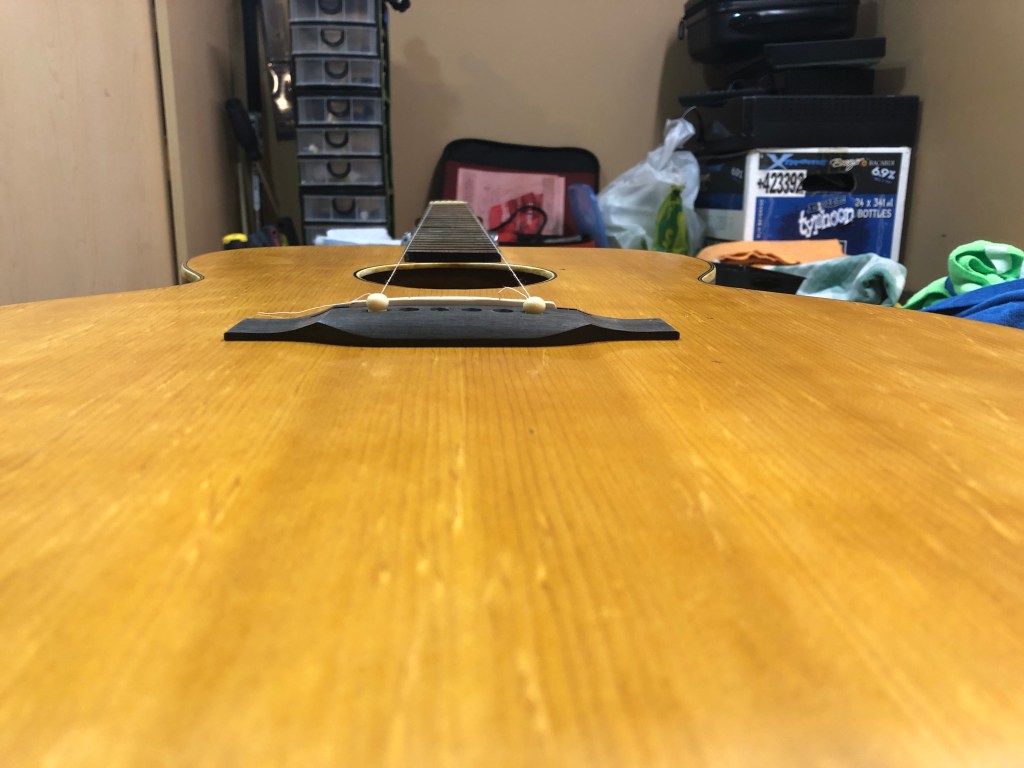
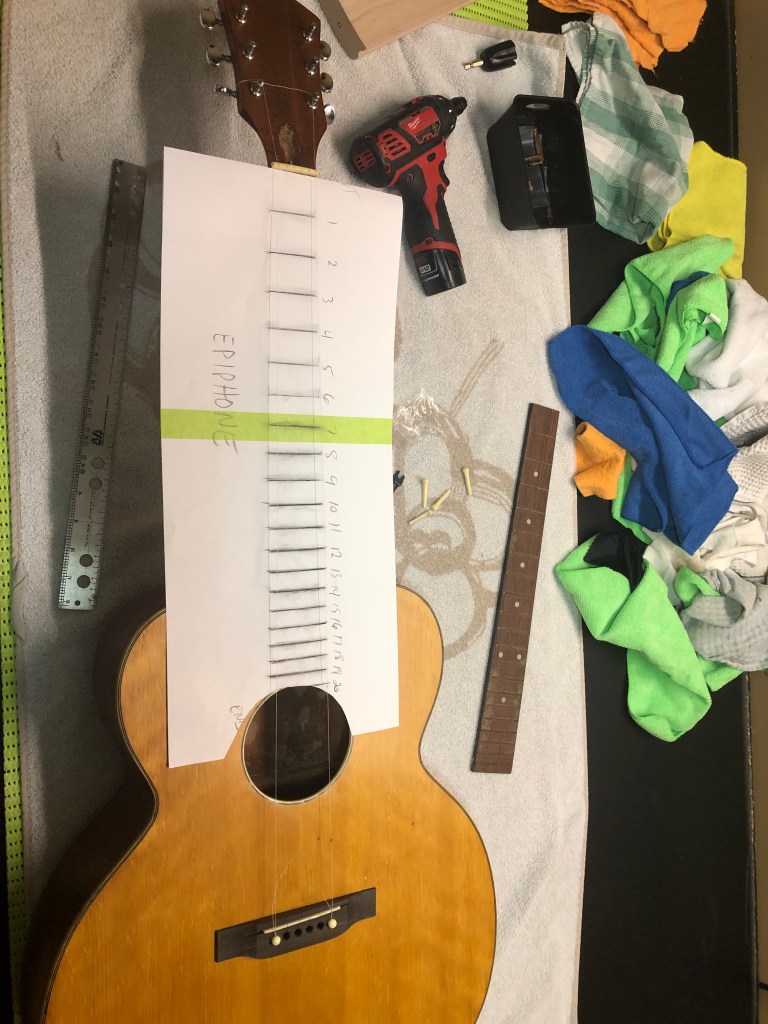
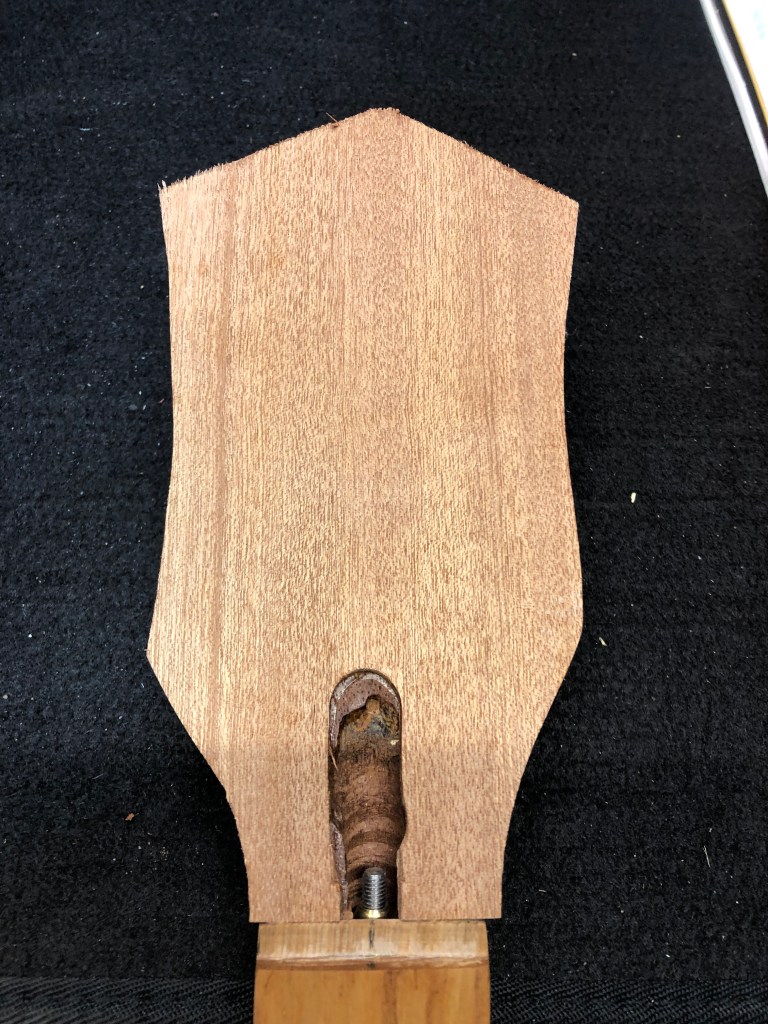
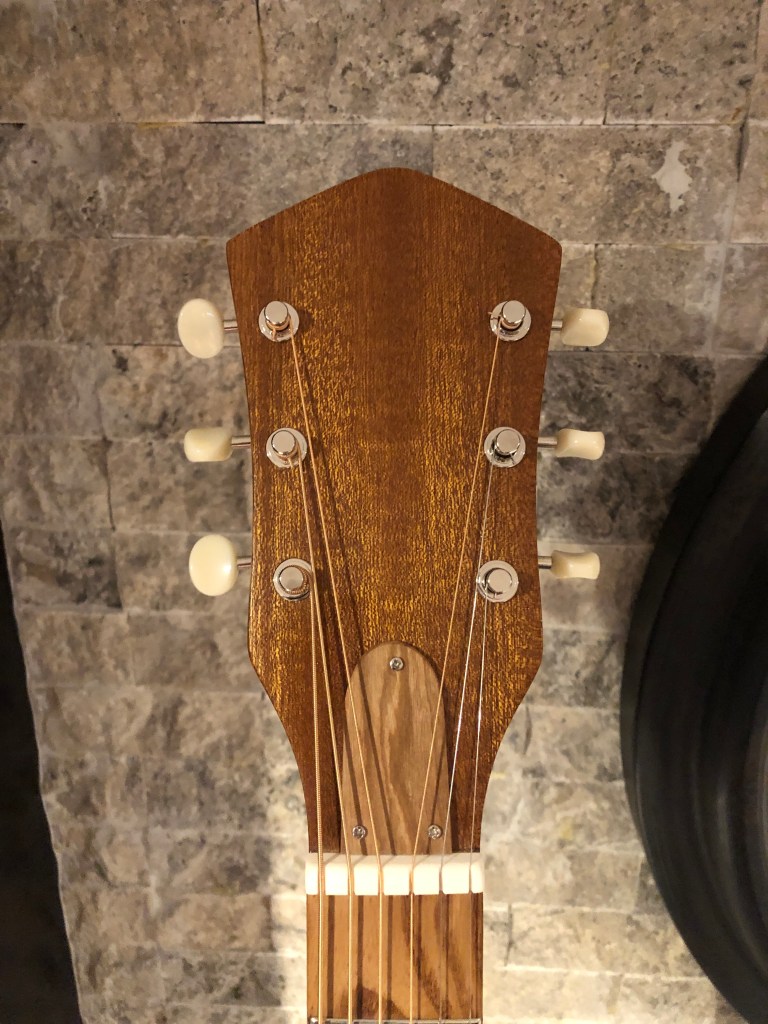
Start by figuring out where to put a new bridge. Obviously I don’t have the original, so making sure the saddle is in the right place for the scale length is pretty important. Having said that, without a fretboard I have no idea where the 12th fret would be either, so I guess the future is all in my hands either way. Since it’s all apart anyway and it’ll be anything but original, I figure I can sand it down and make it look however I want. Now to fix the top above the neck block. Added a spruce brace up against the neck block and a spruce patch on top. That’s where I want the bridge, so mask it off and prepare to lacquer. It’s open anyway, let’s put in a truss rod rather than rigid steel. This is not the fretboard I’m going with, just piece of scrap for getting neck alignment right. I didn’t take a picture of the bridge being glued on, but I expect you have noticed that it wasn’t there before and now it is, so there. Pretty well straight. And here you can see some of that lovely bearclaw pattern in the spruce. Here I made a rubbing of an Epiphone neck that had the very same scale length as I planned for this guitar. The Epiphone had great intonation, so I figured no sense reinventing the wheel. When I go to make the new fretboard, this is the scale I’m going to use.Here’s the fretboard. My good friend Mike helped me huge with this. This is a beautifully patterned piece of Manitoba oak that had been sawn into planks about 100 years ago by a farmer clearing his land, and which luckily for me, Mike eventually had access to a hundred years later. Mike has a planer and a good fret saw setup, which is something I don’t have, so I was fortunate that he did all the rough work for me on the fretboard. Then it was up to me to glue it to the neck, finish shaping it, and give it back to him for fret install. Thanks Mike!And sand and sand and sand. Here’s my homemade “neck set jig” to get the alignment right. Now that the fretboard is on and I have my alignment right, I used a piece of solid mahogany for a headstock veneer. If you’ve seen other posts of mine (1975 Guild), then you’ll have seen that I don’t have a fancy band saw or any real good woodworking tools. After rough cut with a jigsaw, this thing was shaped all by hand, with belt sander, files and hand sand. Got the neck back from Mike with faux tortoise shell fretboard marker dots and frets, ready now to finish-fit the dovetail and “git’r done”. I’ve switched to using fish glue from Lee Valley for my guitars. It’s super easy to work with, cleans up well, has a great bond strength and is still reversible (which is important because I had this bloody thing together and apart and together again 3 times before the neck alignment was perfect – those dovetail joints can be a real pain to get dialled in just right. Lined up, clamped down, wait wait wait. You’ll see I made the truss rod cover out of some similar patterned wood. I used thread down the treble and bass sides to make sure my alignment was just right. The tuners on it are period correct replicas from StewMac.
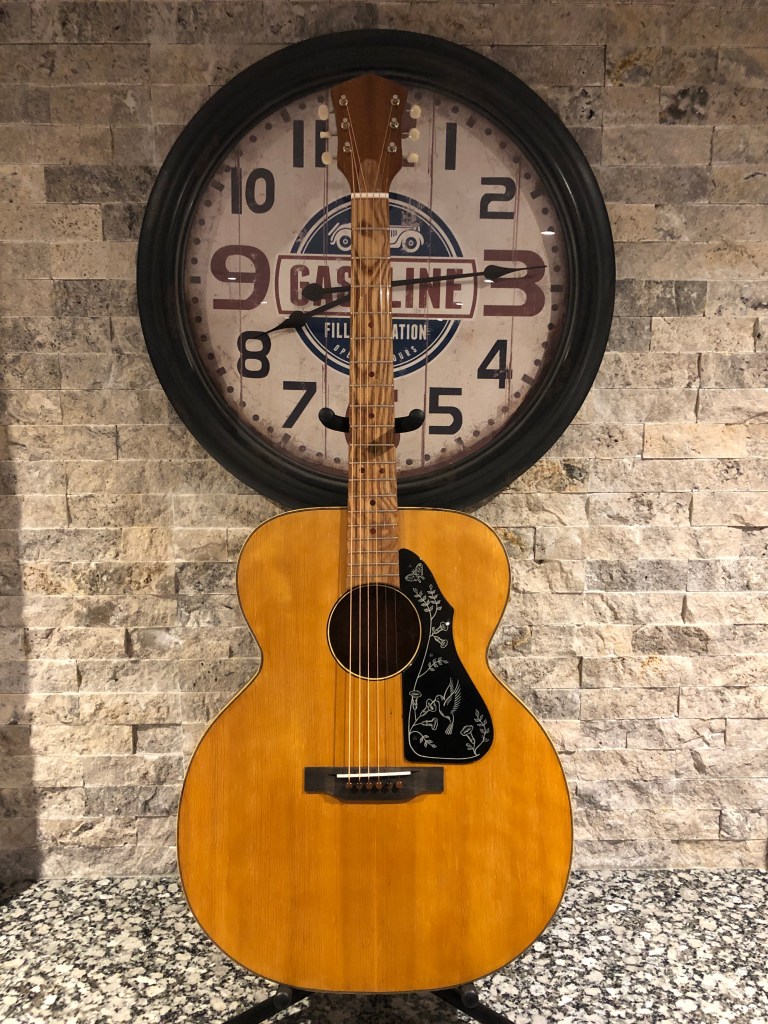
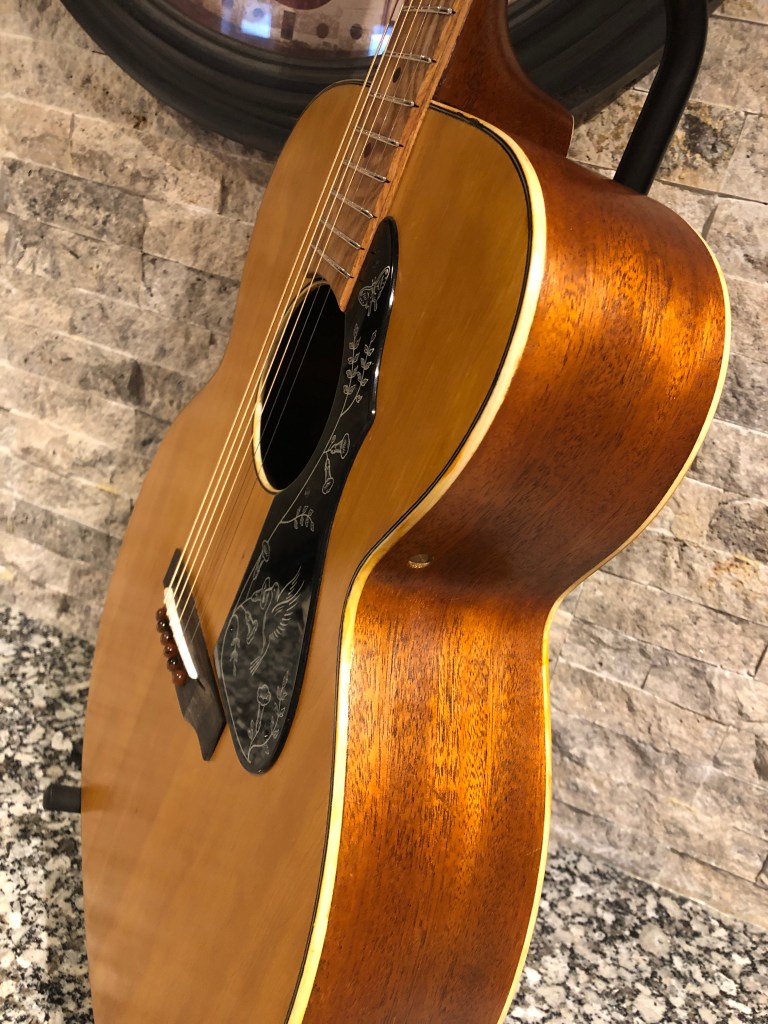
The Reveal
Just look at that bearclaw pattern in the spruce.
So I think it turned out amazingly well, given what I started with. It legitimately was going to the dump before I decided I had to try. There’s over 60 hours restoration in this, and I know full well that someone with skill and the right tools could have built one from scratch in half the time. But wow did I learn a lot from doing this one, and I had a blast.
To be clear, this thing is full of flaws, some are almost imperceptible, some are pretty obvious (if you were paying attention to the photos, you’d have seen them), but it still think it turned out pretty awesome. I believe it plays real well too, although as of this writing I still have yet to get it into the masterful hands of James H to really put it through its paces and know whether it’s all show and no go. When I get a good sound clip I’ll add the link here.



















 General Guitar Works
Looks great Grant, you saved another one !
LikeLike